 Pin It
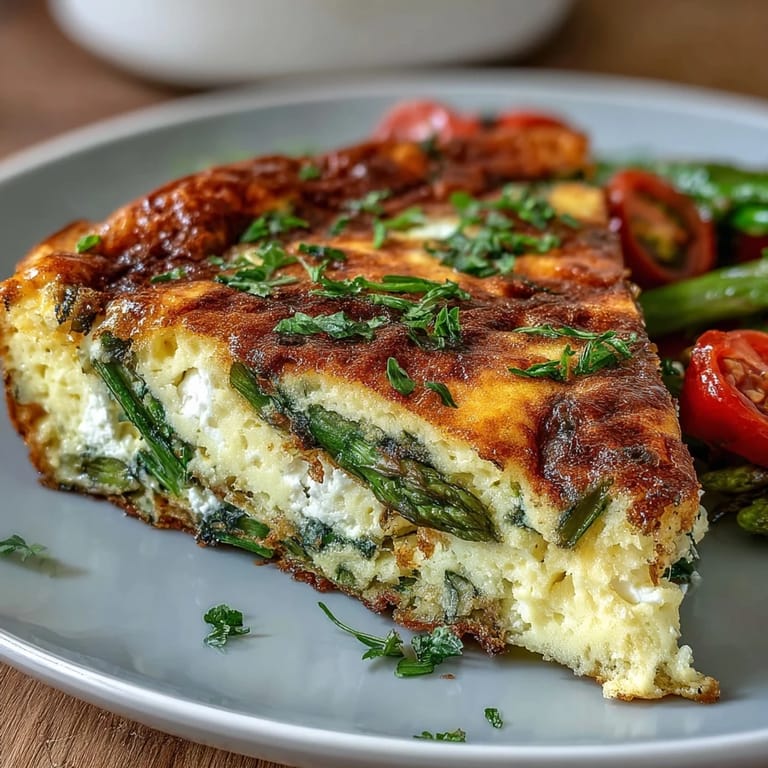
 There's something about spring that makes me want to crack eggs into a skillet and let the season speak for itself. One April morning, after a farmers market run with overflowing bags of asparagus and spinach, I couldn't decide what to make, so I just started sautéing. By the time the goat cheese hit the pan, I knew this frittata was exactly what the moment needed—light, bright, and ready in under an hour.
I made this for friends who showed up unannounced on a Sunday evening, and I remember how they kept asking if I'd been cooking all afternoon. The truth was simpler and somehow more satisfying—just good ingredients, a hot pan, and fifteen minutes of actual work. Watching them tear into it with crusty bread while the kitchen still smelled like fresh herbs felt like I'd cracked some kind of code.
Ingredients
- Asparagus: Trim the woody ends by bending each spear until it snaps naturally, then cut into bite-sized pieces that cook through but still have personality.
- Baby spinach: Roughly chop it rather than leaving whole leaves—they cook down faster and distribute more evenly through the frittata.
- Zucchini: Dice small so it softens quickly and doesn't weigh the eggs down with moisture.
- Cherry tomatoes: Halving them prevents them from bursting and creating pockets of excess liquid that can make the center soggy.
- Green onions: Use the white and light green parts for cooking, then save some darker green for a fresh scatter on top.
- Eggs: Large eggs matter here—they're the foundation, so use ones you trust, and make sure they're at room temperature for the fluffiest result.
- Whole milk or cream: This is what makes the eggs cloud-like and tender, not rubbery; don't skip it or substitute with water.
- Goat cheese: Crumble it by hand rather than slicing, so it distributes in pockets of creaminess throughout every bite.
- Parmesan cheese: Freshly grated makes a real difference in flavor and helps the top brown beautifully.
- Fresh chives and parsley: Add these at the very end so their bright flavor doesn't cook away into nothing.
- Olive oil: Use good quality here—it's one of the main flavors, not just a cooking medium.
Tired of Takeout? 🥡
Get 10 meals you can make faster than delivery arrives. Seriously.
One email. No spam. Unsubscribe anytime.
Instructions
- Heat your oven and pan:
- Set the oven to 375°F and let it preheat while you prep. This matters more than it sounds—an oven that's fully ready means your frittata rises properly.
- Build the vegetable base:
- Pour olive oil into your oven-safe skillet over medium heat, then add asparagus and zucchini first since they take longest to soften. After 3 to 4 minutes, stir in spinach, cherry tomatoes, and green onions, cooking just until the spinach loses its rawness.
- Prepare the egg mixture:
- While vegetables cook, whisk eggs with milk, salt, and pepper in a bowl—whisk long enough that the eggs are pale and slightly frothy, which traps air for that signature fluffy texture.
- Combine and bake:
- Pour the egg mixture over the vegetables, scatter goat cheese, Parmesan, chives, and parsley over top, then let it cook on the stove for 3 to 4 minutes until you see the edges start to pull away slightly from the pan. Transfer the entire skillet to the oven and bake for 12 to 15 minutes until the center is set but still has a subtle jiggle—it will keep cooking as it cools.
- Rest and serve:
- Let it sit for 5 minutes before slicing; this helps it hold together and makes serving cleaner. A simple green salad or warm crusty bread alongside turns this into something that feels like a meal you planned for hours.
 Pin It
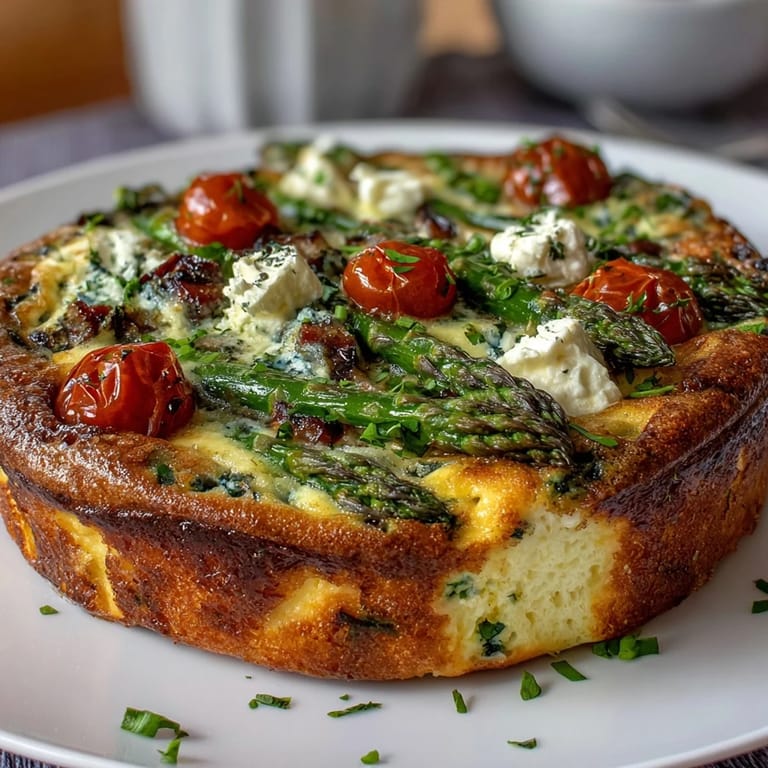
 There was a moment when I served this to my neighbor, who'd been overwhelmed with work and skipping real meals, and she actually closed her eyes between bites. Food doesn't need to be complicated to matter, and watching her slow down over something this simple reminded me why I cook at all.
Spring Vegetables Make All the Difference
The magic of this frittata lives in respecting what's in season right now. Asparagus in spring has a sweetness and tender crunch that frozen asparagus from January simply can't match, and the same goes for spinach, zucchini, and cherry tomatoes at their peak. If you're cooking in late spring and can't find good asparagus anymore, swap in fresh peas or thinly sliced artichoke hearts without hesitation—the recipe is flexible enough to follow the market, not a rigid formula.
The Oven Step Changes Everything
Starting the frittata on the stovetop gives you control and creates those golden, slightly caramelized edges, but moving it to the oven is what makes the inside rise and puff. You're essentially steaming from below and baking from above, which creates a texture you literally cannot achieve by staying on the stove the whole time. The oven also means you're not standing there watching it cook, which is its own kind of freedom on a busy evening.
Ways to Adapt This Without Losing Its Soul
This frittata is forgiving in the best way possible. You can use whatever vegetables you have—red peppers instead of zucchini, mushrooms instead of tomatoes, broccoli instead of asparagus—and the basic structure still holds. The key is keeping vegetables roughly equal in quantity and making sure you don't add anything so watery that it turns the eggs loose and unstable. Fresh herbs matter more than the exact vegetable combination, and goat cheese can swap for feta or crumbled ricotta if that's what's in your fridge.
- If you're dairy-free, use plant-based milk and skip the cheese entirely—the eggs will still puff beautifully.
- Leftovers actually improve by the next day when flavors have time to mingle together.
- This reheats gently in a 300°F oven or tastes wonderful cold straight from the fridge on the second day.
 Pin It
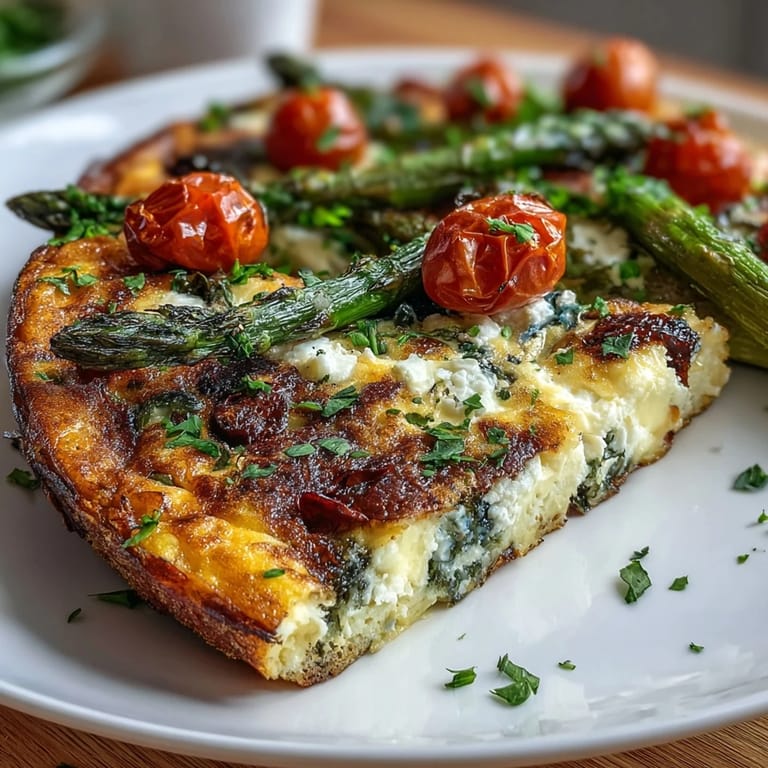
 This frittata reminds me that some of the best meals come together when you stop overthinking and just cook with what the season offers. Make it, share it, and let the simplicity be enough.
Recipe FAQs
- → Can I substitute asparagus with other vegetables?
Yes, peas or artichokes are great alternatives that maintain the fresh spring flavor.
- → What is the best way to ensure the frittata is fully cooked?
Cook the edges on the stove until they start to set, then finish baking in a 375°F oven until the center is puffed and firm.
- → Which type of cheese works best in this dish?
Goat cheese adds creamy tang, complemented by grated Parmesan for extra depth and meltiness.
- → How can I make this dish dairy-free?
Omit the goat and Parmesan cheese and use plant-based milk instead of cream or whole milk.
- → What tools do I need to prepare this frittata?
An oven-safe skillet, mixing bowl, whisk, knife, and cutting board are essential for smooth preparation and cooking.