 Pin It
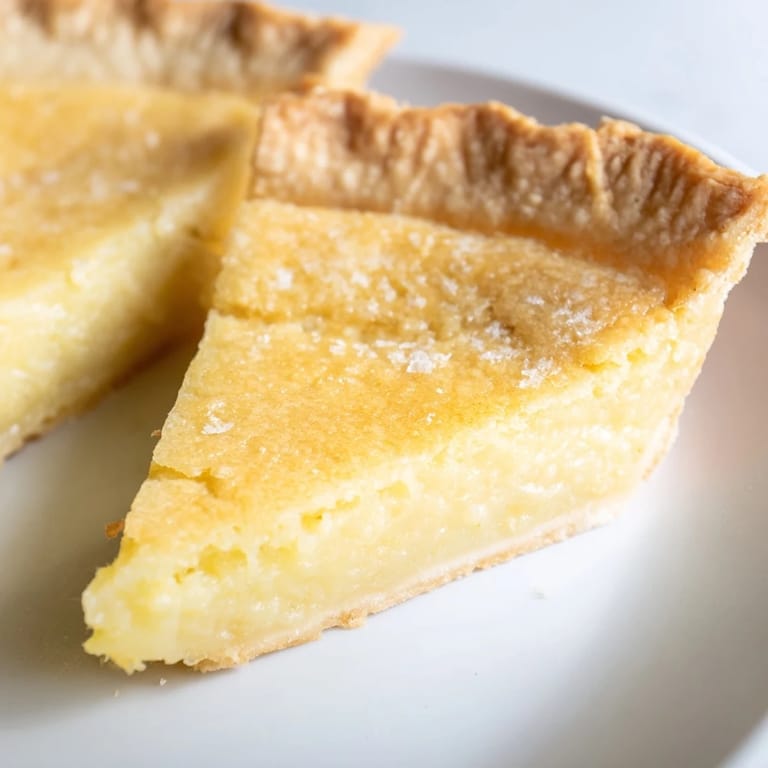
 Chess pie showed up at my grandmother's table every summer, sitting beside the lemonade pitcher with a kind of quiet confidence. I didn't understand it at first—just custard and sugar in a pie shell, nothing fancy—but one afternoon, watching her slice into that golden top to reveal the silky filling beneath, something clicked. It's the kind of dessert that doesn't announce itself, but once you taste it, you realize it's been exactly what you needed.
I made this for a church potluck once, nervous because everyone else was bringing elaborate desserts with multiple layers and decorations. Mine arrived plain and humble in a simple pie dish. By the end of the evening, the plate was empty and someone had written down the recipe on the back of the bulletin. That's when I understood: sometimes the most memorable things are the ones that taste like home.
Ingredients
- Unbaked 9-inch pie crust: Use a homemade crust if you have time, but don't feel guilty reaching for store-bought—this recipe shines either way, and the filling is what matters here.
- Granulated sugar: This is your sweetness and the base of that characteristic creamy texture; don't substitute brown sugar or you'll lose the delicate flavor.
- Unsalted butter, melted and cooled: The key is letting it cool slightly so the eggs don't scramble when you whisk them together; melt it and let it sit while you gather the other ingredients.
- Large eggs: Room temperature eggs mix more smoothly, creating that silky custard texture that makes chess pie special.
- Cornmeal and all-purpose flour: These aren't thickeners in the traditional sense—they create a subtle texture and help stabilize the filling as it sets.
- Salt: A small amount heightens all the sweet vanilla flavors and prevents the pie from tasting flat.
- Whole milk: This keeps the filling from being too dense; it's the ingredient that lets the custard breathe.
- Vanilla extract: Pure vanilla is worth the investment here since there are so few ingredients to hide behind.
- White vinegar: Optional, but I've learned it adds a whisper of brightness that cuts through the sweetness and makes you want another slice.
Tired of Takeout? 🥡
Get 10 meals you can make faster than delivery arrives. Seriously.
One email. No spam. Unsubscribe anytime.
Instructions
- Start with oven and crust:
- Preheat your oven to 350°F and settle the pie crust into your dish, crimping the edges however feels right to you—it doesn't have to be perfect. A dock-free, unbaked crust is all you need here.
- Combine the dry and wet base:
- Whisk your sugar, melted butter, eggs, cornmeal, flour, and salt together until the mixture looks smooth and slightly pale. Take your time with this step because you're building the foundation of that creamy center.
- Add the final touches:
- Pour in the milk, vanilla, and vinegar if you're using it, whisking until everything is silky and completely combined. You'll notice the filling looks almost like a thin batter—that's exactly right.
- Pour and bake:
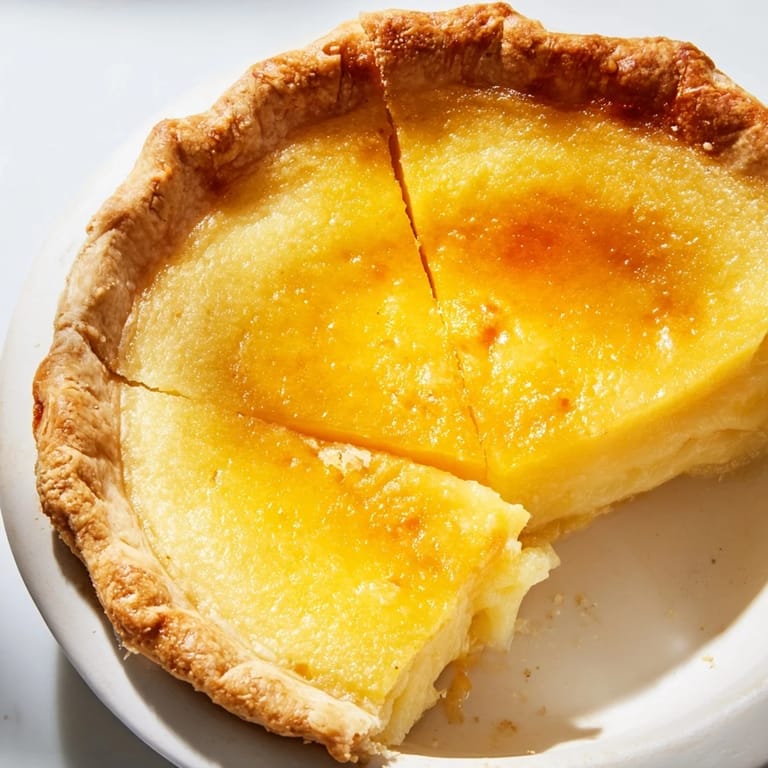
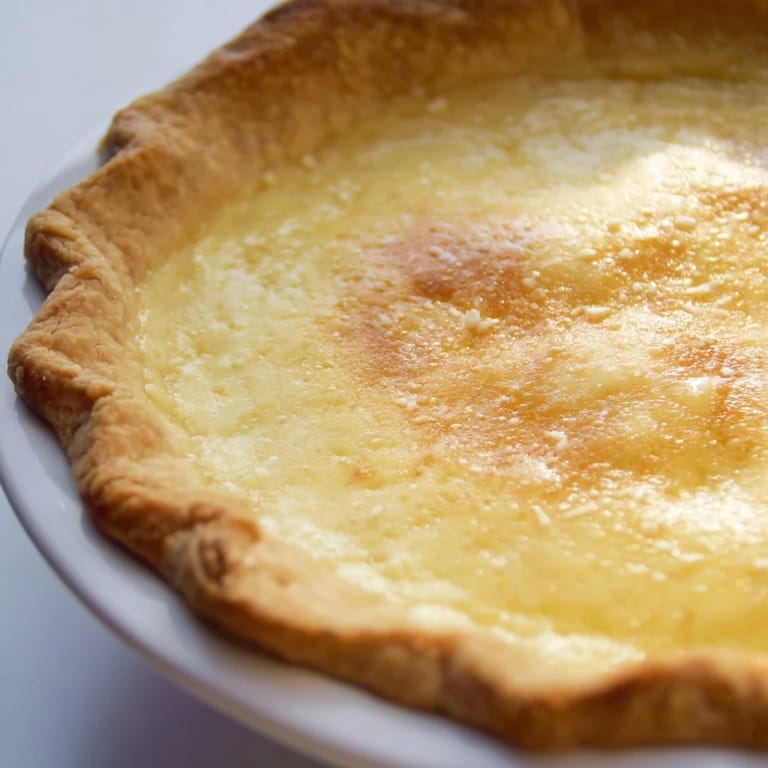
- Carefully pour the filling into your crust and slide it into the oven. Bake for 45 to 50 minutes until the top is golden brown and the center barely jiggles when you gently shake the dish.
- Cool with patience:
- Let the pie cool completely on a wire rack—this is when the filling sets properly and the flavors settle into themselves. It's harder to wait than it is to bake, but it's worth it.
 Pin It
 There's a moment when everyone at the table goes quiet after that first bite, forks pausing mid-air. That moment is worth the 15 minutes of prep work. Chess pie tastes like a secret that's been passed down, even though it's so simple anyone could have invented it.
The Mystery of the Name
No one knows for certain where the name 'chess pie' comes from, though I've heard theories about it being a corruption of 'chest pie' (stored in a pie chest for safekeeping) or simply 'chest-nut pie.' The honest truth is the name doesn't matter much—what matters is that this dessert has survived generations of Southern kitchens because it works. It's foolproof in the way that speaks to good design rather than luck.
Variations Worth Trying
Once you've made this basic version and felt confident with it, you can play. A small pinch of nutmeg adds warmth, lemon zest brings brightness, or a touch of bourbon whispers complexity into the custard. I've learned that this filling is flexible enough to accept these additions without becoming fussy—it's a blank canvas that actually wants to be painted on.
Serving and Storage
Chess pie is best served at room temperature with nothing more than a fork, though whipped cream and fresh berries turn it into something that feels almost fancy. This pie keeps gracefully, covered loosely at room temperature for up to two days, and actually tastes even better the next day when all the flavors have had time to marry.
- Slice with a sharp, warm knife for clean edges that don't drag through the custard.
- Serve it alongside strong black coffee or with a glass of cold milk, depending on your mood.
- Leftovers make an honest breakfast if no one's watching.
 Pin It
 This pie doesn't need perfection or technique—it just needs you to show up with basic ingredients and trust the process. That's when magic happens.
Recipe FAQs
- → What gives chess pie its custard texture?
The combination of eggs, sugar, and melted butter creates the smooth, custard-like texture characteristic of the filling.
- → Can I add extra flavors to the filling?
Yes, adding a pinch of nutmeg or lemon zest enhances the filling’s flavor profile with subtle warmth or brightness.
- → Why is cornmeal included in the filling?
Cornmeal helps thicken the filling and adds a slight grainy texture that contrasts with the creamy custard.
- → How do I know when the pie is perfectly baked?
The center should be just set with a golden brown top that puffs up slightly and settles as it cools.
- → What are good serving ideas for this pie?
Serve the pie cooled alongside fresh berries or a dollop of whipped cream for added richness and freshness.
- → Is vinegar necessary in the filling?
Vinegar is optional but adds a gentle tang that brightens the custard’s richness without overpowering it.