 Pin It
 I spent an afternoon wandering through a local market when a bag of hand harvested wild rice caught my eye. The grains looked like little dark twigs and smelled faintly of wood smoke. I knew immediately I wanted to pair them with the earthy mushrooms that were just coming into season. This soup grew from a simple experiment into the dish that now defines every rainy Tuesday in my kitchen.
Last November a sudden frost turned the windows opaque while this pot simmered on the stove. My sister arrived unannounced with wet boots and a cold nose and we just sat in the steam filled kitchen. We did not even use the dining table opting instead for bowls held tight in our hands. The smell of rosemary and thyme filled the air making the small house feel like a safe haven.
Ingredients
- Olive Oil: Use a high quality oil to start the base with a rich and silky mouthfeel.
- Yellow Onion: This humble vegetable melts into the background while providing essential sweetness.
- Celery: It adds a subtle crunch and a savory depth that balances the cream.
- Carrots: These provide a pop of color and a gentle earthy sweetness to the broth.
- Garlic Cloves: Freshly minced garlic adds a punch that brightens the deeper mushroom notes.
- Fresh Thyme: These tiny leaves pack a powerful aromatic punch that defines the soup profile.
- Rosemary: A little goes a long way to evoke the feeling of a forest floor.
- Bay Leaf: It works silently in the background to tie all the herbal notes together.
- Fresh Parsley: This adds a necessary hit of brightness right before you serve the bowls.
- Mixed Wild Mushrooms: Using shiitake and oyster mushrooms gives you a variety of textures and deep umami flavor.
- Uncooked Wild Rice: Real wild rice takes time to cook but offers a nutty flavor nothing else can replicate.
- Vegetable Broth: A high quality broth serves as the canvas for all these complex flavors.
- Heavy Cream: This transforms the liquid into a luxurious and velvety embrace.
- All Purpose Flour: It helps create a light roux that gives the soup its perfect body.
- Soy Sauce: This is my secret weapon for adding a saltiness that also deepens the brown color.
- Salt and Black Pepper: Always season in layers to ensure every component is perfectly balanced.
Tired of Takeout? 🥡
Get 10 meals you can make faster than delivery arrives. Seriously.
One email. No spam. Unsubscribe anytime.
Instructions
- Sauté the vegetables:
- Heat your oil and let the onions carrots and celery soften until they become translucent and fragrant. This foundation is where the flavor really begins to build.
- Aromatize the pot:
- Stir in your garlic and herbs to let their oils release into the warm fat. You will know it is ready when the kitchen starts to smell like a herb garden.
- Brown the mushrooms:
- Add your mushroom slices and watch them release their water then start to turn golden brown. Do not rush this part because the browning is where the deep flavor lives.
- Create the base:
- Sprinkle the flour over your sautéed mixture and stir it well to coat every piece. Cook it for a minute to remove the raw flour taste before adding any liquid.
- Simmer the rice:
- Pour in your broth slowly while stirring then add the wild rice and soy sauce. Cover the pot and let the rice slowly bloom and soften over a gentle heat.
- Finish with cream:
- Once the rice is tender remove the bay leaf and stir in the heavy cream and parsley. Let it sit for just a few minutes so the flavors can fully introduce themselves.
 Pin It
 There was a time I accidentally doubled the rosemary and thought the batch was ruined. Instead it became the most requested version by my neighbors who loved the piney scent. It taught me that sometimes a heavy hand leads to a beautiful new signature.
Mushroom Preparation Secrets
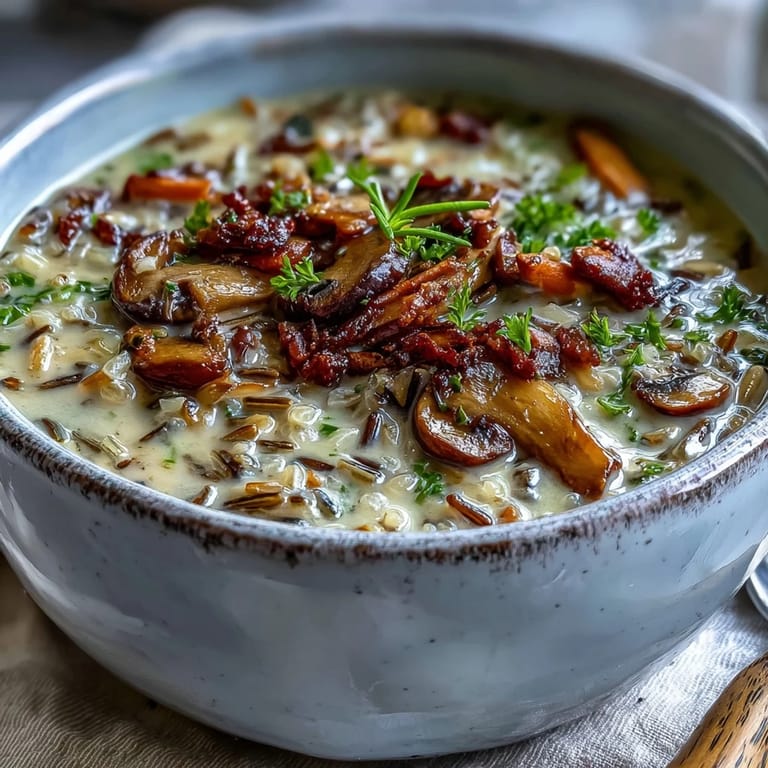
Mushrooms are like little sponges and will soak up all the oil if you are not careful. I like to let them sit undisturbed in the pot for a few minutes to get a nice sear. This creates a much more interesting texture than just boiling them in the broth.
Choosing Your Rice
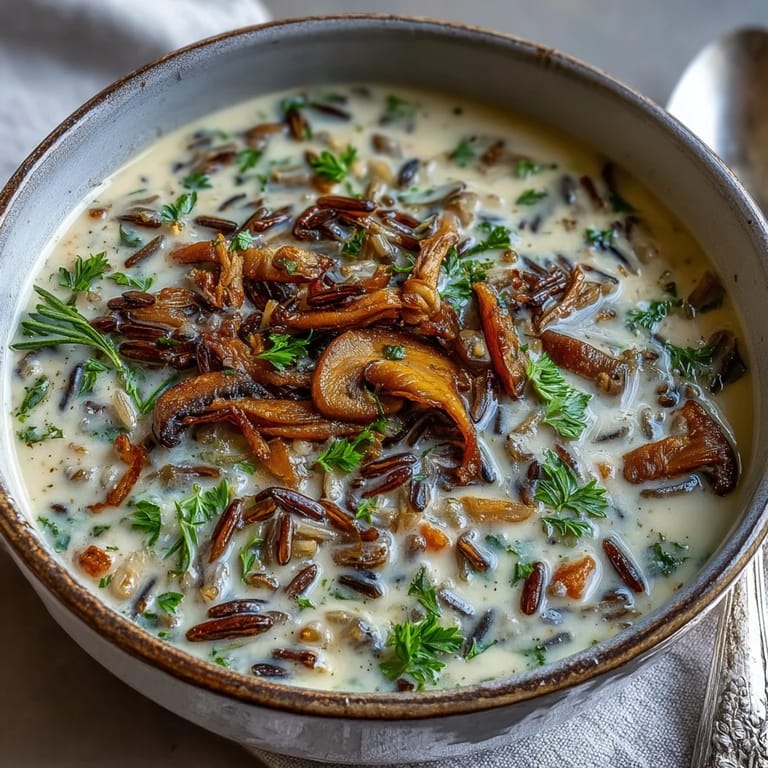
Make sure you are buying true wild rice and not a blend that contains white or brown rice. The cooking times are very different and a blend will turn to mush before the wild rice is ready. The dark long grains are what give this soup its regal appearance and chewy bite.
Storage and Serving Suggestions
This soup is quite hearty on its own but it loves a companion. I often serve it with a side of toasted sourdough rubbed with a garlic clove. It also keeps remarkably well for lunch the next day when the flavors have had more time to mingle.
- Store any leftovers in an airtight container for up to three days.
- Warm it up slowly on the stove rather than using the microwave.
- Add a splash of extra broth if the rice has absorbed too much liquid overnight.
 Pin It
 This bowl is a warm hug on a cold day and I hope it brings as much comfort to your table as it does to mine. Enjoy every nutty bite and the earthy aroma that lingers in your home.
Recipe FAQs
- → Do I need to cook wild rice before adding it to the soup?
No, add uncooked wild rice directly to the simmering broth. It cooks alongside the vegetables, absorbing flavors and becoming tender in 40-45 minutes. Rinse the rice before adding to remove excess starch.
- → Can I use regular mushrooms instead of wild varieties?
Yes, button or cremini mushrooms work well. For more earthy flavor, try adding dried porcini mushrooms rehydrated in hot broth, or use a mix of fresh mushrooms including shiitake or oyster for depth.
- → How do I make this soup gluten-free?
Replace all-purpose flour with a gluten-free flour blend or cornstarch slurry. Use gluten-free soy sauce or tamari, and verify your vegetable broth is certified gluten-free. The wild rice itself is naturally gluten-free.
- → Can I freeze this soup for later?
The soup freezes well for up to 3 months. However, cream can separate when frozen and reheated. For best results, freeze the soup before adding cream, thaw overnight in the refrigerator, then reheat and stir in fresh cream before serving.
- → What can I substitute for heavy cream?
Coconut cream adds richness with subtle sweetness. Cashew cream blends smoothly and mimics dairy cream's texture. For lighter options, use half-and-half or evaporated milk, though the soup will be less rich and velvety.
- → How do I prevent the soup from becoming too thick?
The flour and wild rice naturally thicken the broth as it simmers. If the consistency becomes too thick, simply add more vegetable broth, ½ cup at a time, until reaching desired thickness. For a lighter soup, reduce flour to 2 tablespoons.