 Pin It
 There's something about the smell of sautéing onions and celery that instantly makes a kitchen feel like home, and this Tuscan white bean soup does exactly that. My neighbor Maria shared her family's version with me one October afternoon, and I've been tweaking it ever since, learning that the secret isn't just the ingredients but how you treat them with patience. The first time I made it, I rushed the bean mashing step and ended up with soup that was too thick, but that mistake taught me the delicate balance between hearty and creamy. Now whenever the weather turns cool, this pot simmers on my stove, filling the house with warmth before anyone even tastes it.
I made this for my sister when she was going through a rough week, and watching her face light up at the first spoonful reminded me why comfort food matters so much. She asked for the recipe that same evening, and now it's become her go-to when she's cooking for friends who need a little nourishment and care.
Ingredients
- Olive oil: Use good quality here because it'll shine through in the final drizzle, and medium heat is your friend so it doesn't brown before the vegetables go in.
- Yellow onion, carrots, and celery: This trio is the Italian holy trinity, and dicing them evenly helps them soften at the same pace without any raw pieces lingering.
- Garlic cloves: Fresh minced garlic makes all the difference; the jar stuff won't give you that fragrant moment that makes you pause and appreciate what you're doing.
- Kale: Remove those tough stems completely or you'll bite into them later and regret it; the leaves are where the magic happens.
- Canned diced tomatoes: Draining them prevents the soup from becoming watery, which I learned after my first attempt turned into more broth than substance.
- Cannellini beans: Rinsing them removes the starchy liquid and prevents the soup from turning gray and gluey.
- Vegetable broth and water: The combination gives you flavor without being overwhelming, and low-sodium lets you control the salt balance.
- Thyme, rosemary, and bay leaf: These dried herbs are your flavor foundation; don't skip the bay leaf because it adds a subtle earthiness you can't quite identify but absolutely feel.
- Red pepper flakes: Optional but recommended because a whisper of heat wakes everything up without making it spicy.
- Parmesan cheese: Freshly grated melts into the soup more elegantly than pre-shredded, and the salty umami is the final punctuation mark.
Tired of Takeout? 🥡
Get 10 meals you can make faster than delivery arrives. Seriously.
One email. No spam. Unsubscribe anytime.
Instructions
- Build your flavor base:
- Pour olive oil into your large pot and let it warm over medium heat until it shimmers slightly, then add the onion, carrots, and celery together. Stir them occasionally as they soften, about 5-6 minutes, and you'll notice the raw sharpness giving way to something sweeter and more mellow.
- Wake up the garlic:
- Once the vegetables are tender, add your minced garlic and stir constantly for just one minute until the smell becomes almost overwhelming in the best way. If you cook it longer, it turns bitter, so watch the clock here.
- Introduce the kale:
- Pile in all that chopped kale and watch it seem impossible to fit, then keep stirring as it collapses and releases its earthiness into the pot. After 2-3 minutes it'll soften enough to make room for everything else.
- Combine everything:
- Add your drained tomatoes, rinsed beans, broth, water, and all the dried herbs and spices at once, stirring well so nothing sticks to the bottom. This is when your kitchen will smell like an Italian grandmother's house.
- Simmer with intention:
- Bring the pot to a boil, then immediately turn the heat down and let it bubble gently for 25 minutes, stirring now and then. The longer simmer lets flavors marry and the beans absorb the herby broth.
- Create creaminess:
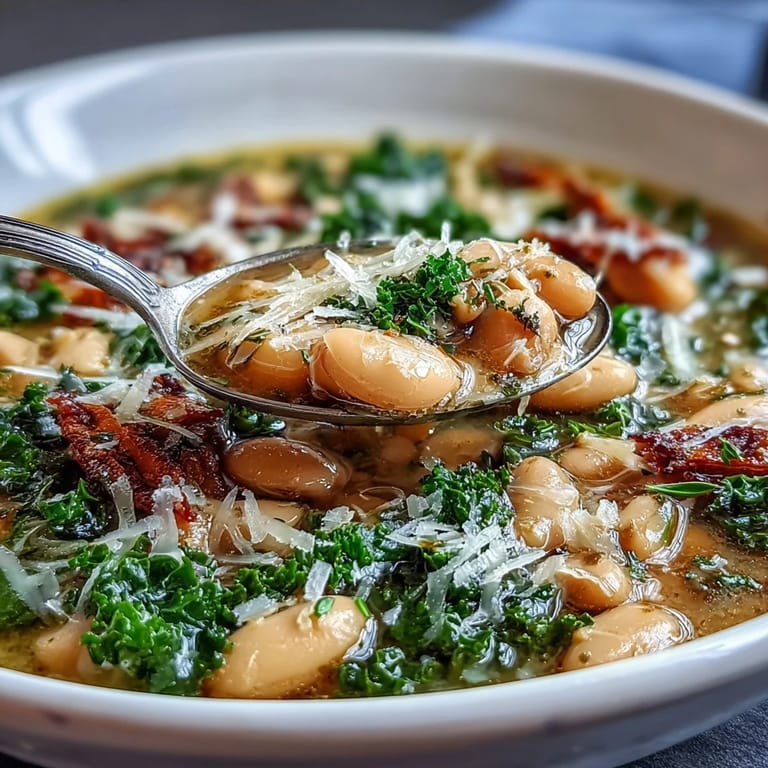
- Remove the bay leaf, then take your potato masher and gently press some of the beans against the side of the pot, breaking them down to thicken the broth. You're looking for a balance where some beans stay whole and others dissolve into creamy pockets of flavor.
- Season with confidence:
- Taste as you go, adding salt and black pepper in small increments because you can always add more but you can't take it back. Remember that the Parmesan will add saltiness later.
- Finish with flourish:
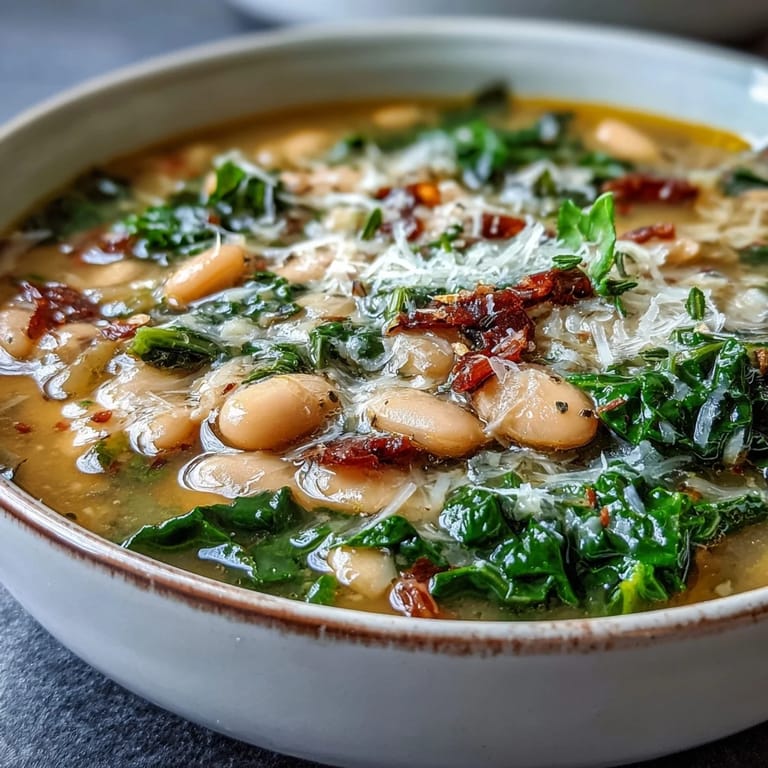
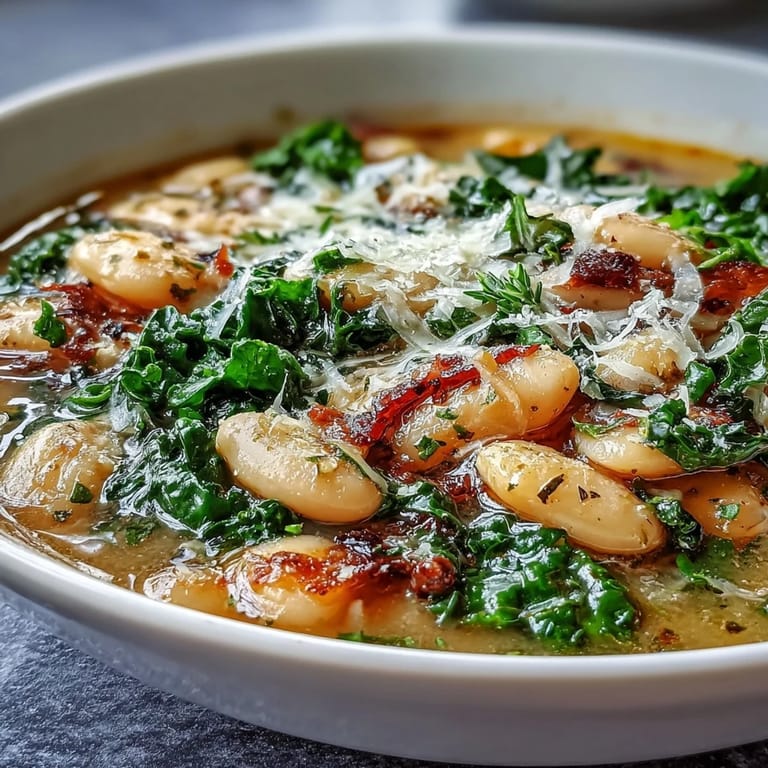
- Ladle the soup into bowls and top each one with a generous handful of freshly grated Parmesan, a drizzle of extra virgin olive oil, and fresh parsley if you have it. The warm soup will slightly melt the cheese and draw out its nutty aroma.
 Pin It
 There's a moment in making this soup when everything comes together and you realize you've created something nourishing with your own hands, and that feeling never gets old. It's the kind of meal that makes people slow down and talk to each other, which might be the best ingredient of all.
The Art of Bean Mashing
The secret to this soup's personality is understanding that you don't want it completely smooth or entirely chunky, but somewhere beautifully in between. I used to either mash too aggressively, turning everything into paste, or skip it entirely because I didn't understand the point. The moment I learned to press gently, releasing some bean starch while keeping whole beans intact, everything changed about how the soup felt on my tongue and stuck to my ribs afterward.
Why Kale Works Here
Kale in raw salads can feel like an obligation, but in hot soup it transforms into something tender and almost sweet, absorbing all the herbs and broth flavors. The heat softens those tough fibers and mellows any bitterness, which is why so many people who claim to hate kale will actually eat this soup without complaint. I've converted several skeptics this way, and it's become a gentle argument settler in my kitchen.
Variations and Flexibility
This soup is forgiving in ways that make it perfect for whoever is at your table and whatever vegetables you happen to have on hand. The foundation of beans, broth, and herbs is strong enough to support changes without falling apart, and that's what makes it feel like a recipe you'll keep making instead of one you'll make once.
- Spinach swaps easily for kale if that's what you prefer, though it'll cook down even faster so add it near the end.
- Add cooked chicken or white fish if you want protein beyond the beans, or keep it vegetarian as written for something lighter and cheaper.
- A splash of white wine in place of some water adds brightness, though the soup is perfectly balanced without it.
 Pin It
 This soup has become one of my reliable friends in the kitchen, showing up whenever the weather turns or someone needs comfort in a bowl. It's simple enough that even a tired evening won't defeat you, but thoughtful enough that it tastes like you cared.
Recipe FAQs
- → What beans are best for this dish?
Cannellini beans are ideal due to their creamy texture and mild flavor, complementing the vegetables and herbs well.
- → Can I substitute kale with other greens?
Yes, spinach or Swiss chard can be used as alternatives, offering a softer texture and slightly different flavor profile.
- → How can I achieve a creamier texture?
Mashing some of the beans directly in the pot helps thicken the broth and adds a creamy consistency without dairy.
- → Is this suitable for vegetarians?
Yes, it’s fully vegetarian, especially when Parmesan is included; omit or replace Parmesan for a dairy-free version.
- → What herbs enhance the flavor most?
Dried thyme and rosemary impart an earthy aroma, while bay leaf adds depth during the simmering process.
- → What wine pairs well with this dish?
A crisp Pinot Grigio or a light Chianti pairs beautifully with the herbaceous and savory notes here.