 Pin It
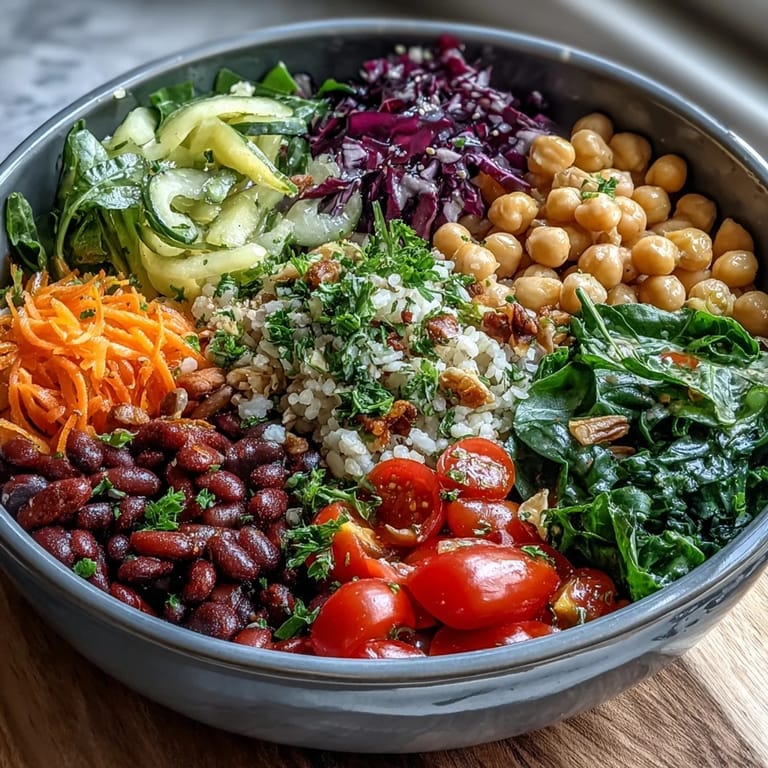
 There's something magical about building a salad that looks like a painter's palette. I discovered this rainbow bowl on a Tuesday afternoon when my fridge was bursting with vegetables I kept meaning to use, and I decided to stop overthinking it and just layer them by color. The result was so visually stunning that my usually salad-resistant partner actually asked for seconds. What started as a creative way to avoid food waste became my go-to power lunch, the kind that actually keeps you satisfied until dinner.
I brought this to a potluck last spring, skeptical about whether anyone would touch a salad when there were casseroles and desserts everywhere. But watching people come back for thirds while raving about how vibrant and alive it tasted reminded me that food doesn't have to be complicated to be memorable. That day, this salad became the dish people texted me asking for the recipe.
Ingredients
- Cooked quinoa or brown rice: The grain is your foundation, and cooling it first prevents it from absorbing all the dressing and turning soggy, a mistake I made more than once before learning better.
- Cherry tomatoes, halved: Their natural sweetness and juiciness brighten every bite, and halving them prevents them from rolling off your fork.
- Shredded purple cabbage: Beyond the gorgeous color, this adds a subtle crunch and keeps its texture even if you assemble the salad ahead of time.
- Grated carrots: Raw carrots bring natural sweetness and a satisfying snap that cooked vegetables simply can't replicate.
- Yellow bell pepper, diced: Choose one that feels heavy for its size, which means it's packed with juice and flavor rather than mostly air.
- Baby spinach leaves: Tender and delicate, they wilt slightly from the warm dressing without becoming mushy or bitter.
- Cucumber, sliced: The cooling element that balances the earthier components and adds hydration to every forkful.
- Chickpeas and black beans, drained and rinsed: These two proteins work together to create different textures and flavors, offering substance that transforms this from side dish to main course.
- Roasted cashews or almonds, chopped: Toasted nuts add richness and a creamy element without any dairy, plus they stay crunchy if you don't dress the whole bowl.
- Pumpkin and sunflower seeds: These aren't just garnish but tiny nutritional powerhouses that add texture contrast and a mild nuttiness.
- Extra-virgin olive oil: Quality matters here since it's the backbone of your dressing, so use one you'd actually taste on its own.
- Fresh lemon juice: Always fresh, never bottled, because the brightness of real lemon is what makes this dressing taste alive rather than flat.
- Maple syrup or honey: A small amount balances the acidity and brings subtle warmth that ties all the flavors together.
- Dijon mustard: This acts as an emulsifier, helping the oil and lemon juice meld into something creamy rather than separated and oily.
- Garlic, minced: Raw garlic adds a gentle punch, but mince it fine so you get the flavor without large pieces overpowering individual bites.
- Fresh parsley or cilantro: The final flourish that smells bright and feels intentional, making the whole bowl feel restaurant-worthy.
Tired of Takeout? 🥡
Get 10 meals you can make faster than delivery arrives. Seriously.
One email. No spam. Unsubscribe anytime.
Instructions
- Cook your grain and let it breathe:
- Follow package directions for your quinoa or rice, then spread it on a plate to cool completely so it doesn't steam-cook the vegetables later. I learned this the hard way when I tried to save time by using warm grain and ended up with a wilted, mushy situation.
- Prep your vegetables with intention:
- Wash and dry everything thoroughly, then cut each component to a similar bite-sized scale so no single element dominates. Take your time here because these vegetables are the stars, and uniform sizes make eating the salad feel intentional rather than chaotic.
- Arrange by color like you mean it:
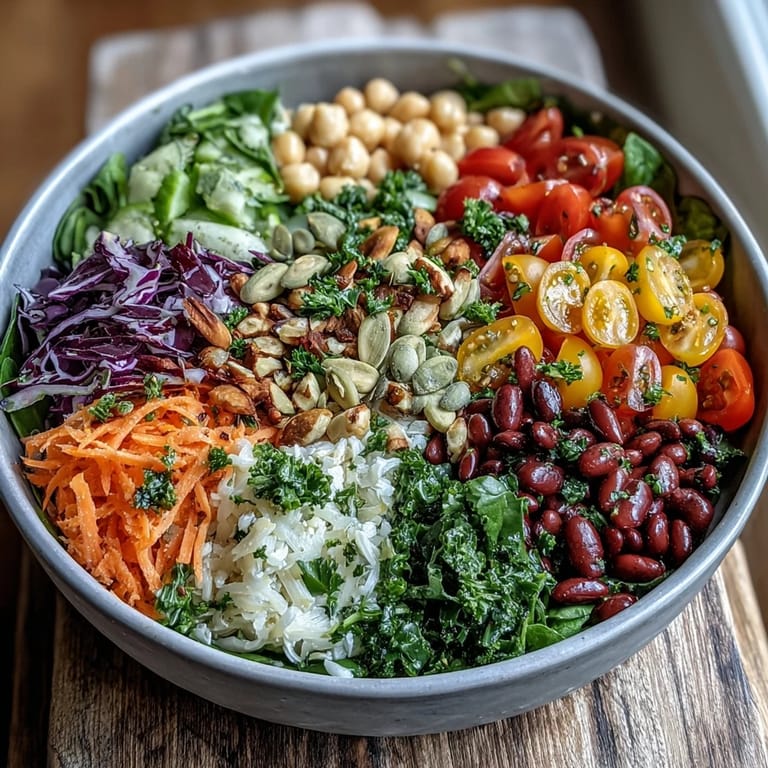
- Whether you're using a large bowl or a platter, group vegetables by hue in separate sections, then nestle your grains and beans in between. This isn't just pretty plating, it's practical because it prevents flavors from muddying together before dressing, and guests can see exactly what they're getting.
- Build your dressing with patience:
- Whisk the lemon juice and mustard first, then slowly drizzle in the olive oil while whisking constantly, which creates an emulsion that actually clings to vegetables rather than pooling at the bottom. Add your garlic last so it stays bright rather than cooking into bitterness.
- Dress strategically and taste as you go:
- If you're serving immediately, drizzle dressing over everything right before eating and toss gently so nothing breaks apart. If guests are helping themselves, serve dressing on the side so people can control their own saturation levels.
- Finish with fresh herbs and a moment of pride:
- Scatter your chopped parsley or cilantro over the top right before serving, which adds aroma and a final pop of color that makes the whole thing feel complete and intentional.
 Pin It
 There's a quiet satisfaction in knowing you're eating something that's genuinely nourishing, something your body will thank you for later. This salad taught me that healthy food doesn't have to taste like punishment or look boring on the plate.
The Joy of Building Your Own Bowl
One of my favorite things about this salad is how it invites customization without requiring apology. I've made it with farro instead of quinoa on weeks when I'm feeling grain-hungry, and I've skipped the beans entirely on nights when I knew there would be grilled tofu on the table. The structure stays solid because the formula isn't about specific ingredients but about balance: something starchy, something green, something crunchy, something creamy, something bright. Once you understand that formula, you stop following recipes and start cooking from instinct.
Storing and Prepping Ahead
I've learned that prepping individual components and storing them separately in the fridge means this salad can live in your kitchen all week, ready to be assembled in minutes whenever hunger strikes. The grain, beans, and dressing all keep beautifully for up to five days, while vegetables are best chopped no more than two days ahead. The nuts and seeds stay in an airtight container so they maintain their crunch until the exact moment you serve. This approach transforms salad from something that requires commitment to eat immediately into something that actually becomes more convenient as the week progresses.
When This Salad Becomes Something More
What started as a practical way to use vegetables has become the dish I reach for when I want to feel good, when I'm feeding someone whose dietary needs I want to honor without fuss, or when I need to remind myself that eating well can actually be enjoyable. There's something about the combination of colors, textures, and flavors that makes eating feel like an act of kindness toward yourself.
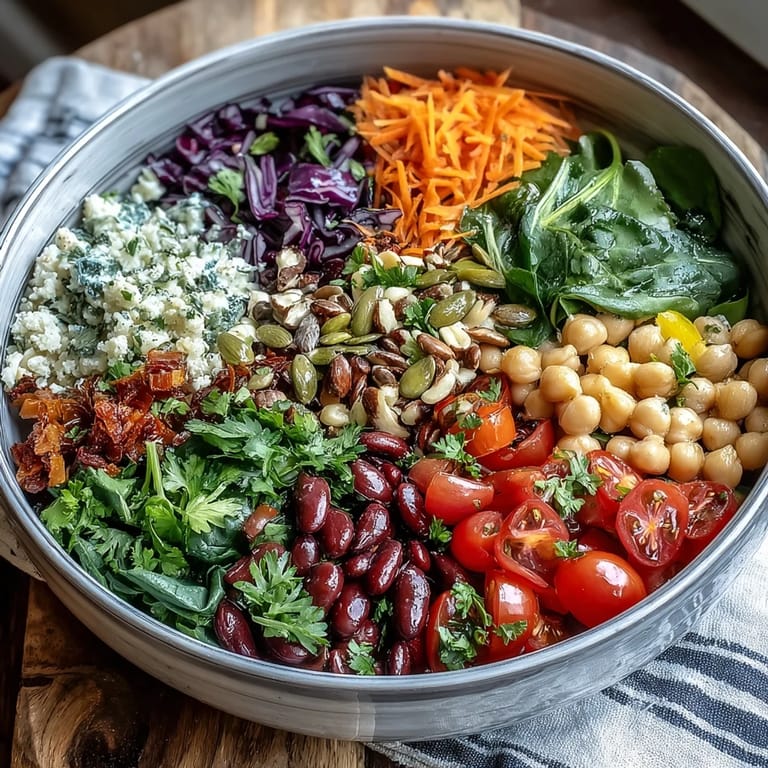
- If you're making this for a gathering, assemble the components on a large wooden board or platter so guests can build their own bowls, which makes everyone feel involved and lets people customize to their preferences.
- Leftovers are actually better the next day after flavors have mingled, but don't add dressing until you're ready to eat unless you enjoy soft vegetables.
- This salad pairs beautifully with grilled chicken, crispy tofu, or a poached egg on top if you want to add another protein layer, though it's already substantial on its own.
 Pin It
 This rainbow bowl has become my proof that nourishing food can be joyful, colorful, and something you actually crave rather than force yourself to eat. Every time I make it, I remember why I started cooking in the first place.