 Pin It
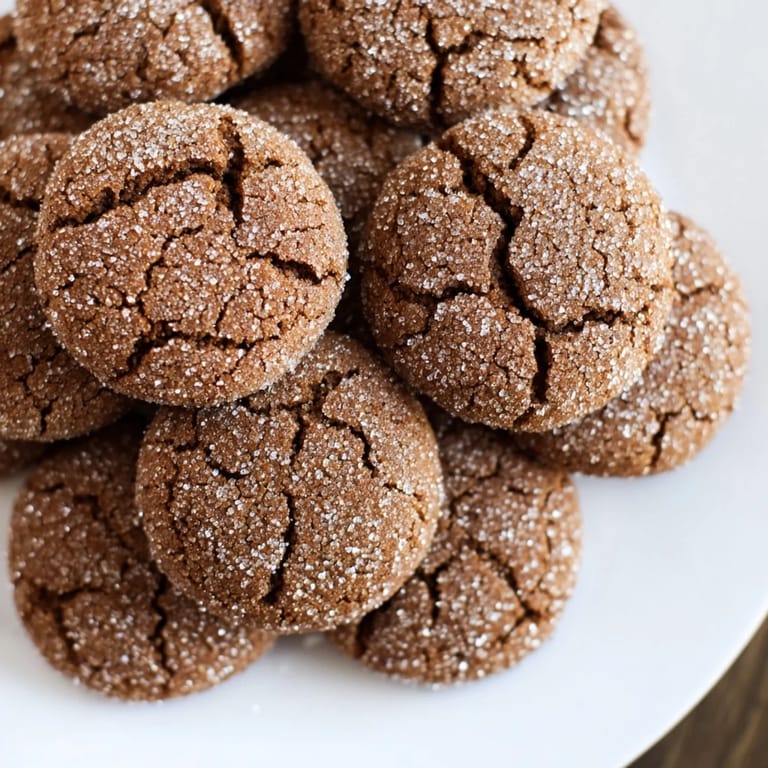
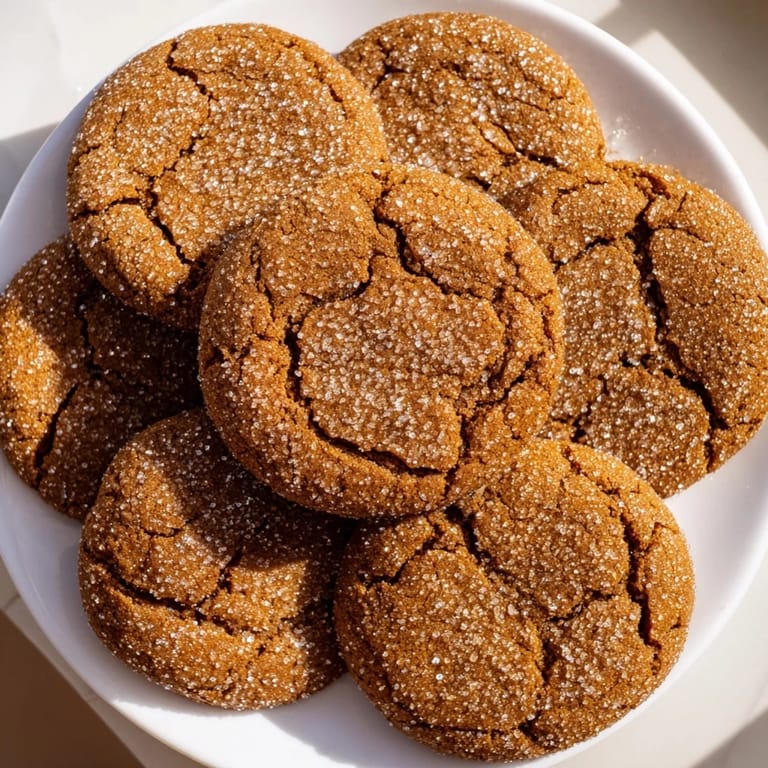
 My grandmother's kitchen always smelled like molasses and cinnamon around November, and I'd watch her pull these dark, glossy cookies from the oven with the kind of practiced ease that only comes from making them year after year. One December, I decided to recreate them myself, thinking I'd modernize the recipe somehow, but after that first batch, I realized there was no improving on what she'd perfected decades ago. These molasses cookies aren't fussy or complicated—they're just deeply flavored, chewy, and honest, with that perfect moment when they're still warm and the sugar coating catches the light.
I brought these to a cookie exchange last winter, and a friend took one bite and immediately asked for the recipe—then she came back the next week because she'd made three batches and couldn't stop. That's when I knew they belonged in regular rotation, not just as a holiday thing.
Ingredients
- All-purpose flour (2 1/4 cups): This is your structure; don't skip the measuring spoon for precision, and if you're in a humid climate, you might need slightly less.
- Ground ginger (2 teaspoons): Fresh-ground ginger makes a noticeable difference, so if you have a spice grinder, use it—the flavor lingers longer on your palate.
- Ground cinnamon (1 teaspoon): Quality matters here; old cinnamon from the back of your spice cabinet will taste dusty and flat.
- Ground cloves (1/2 teaspoon): This is small but mighty; cloves are the secret that makes people say they can't quite identify what flavor they're tasting.
- Ground nutmeg (1/4 teaspoon): A gentle spice that rounds everything out without being obvious.
- Baking soda (2 teaspoons): Don't confuse this with baking powder; the soda reacts with the molasses to give you that signature chew.
- Salt (1/2 teaspoon): This balances the sweetness and makes the spices pop—taste your dough and you'll notice immediately.
- Unsalted butter (3/4 cup, softened): Room temperature butter creams into the sugar properly; cold butter will make your mixing harder and your cookies less fluffy.
- Packed dark brown sugar (1 cup): Pack it firmly when measuring; light brown sugar will make these taste slightly different and less molasses-forward.
- Molasses (1/4 cup): Use the unsulfured kind if you can find it—it's milder and lets the spices shine without an overpowering bitter edge.
- Large egg: Room temperature eggs blend in more smoothly, giving you better texture.
- Pure vanilla extract (1 teaspoon): Vanilla here is subtle, playing support to the spices rather than leading the show.
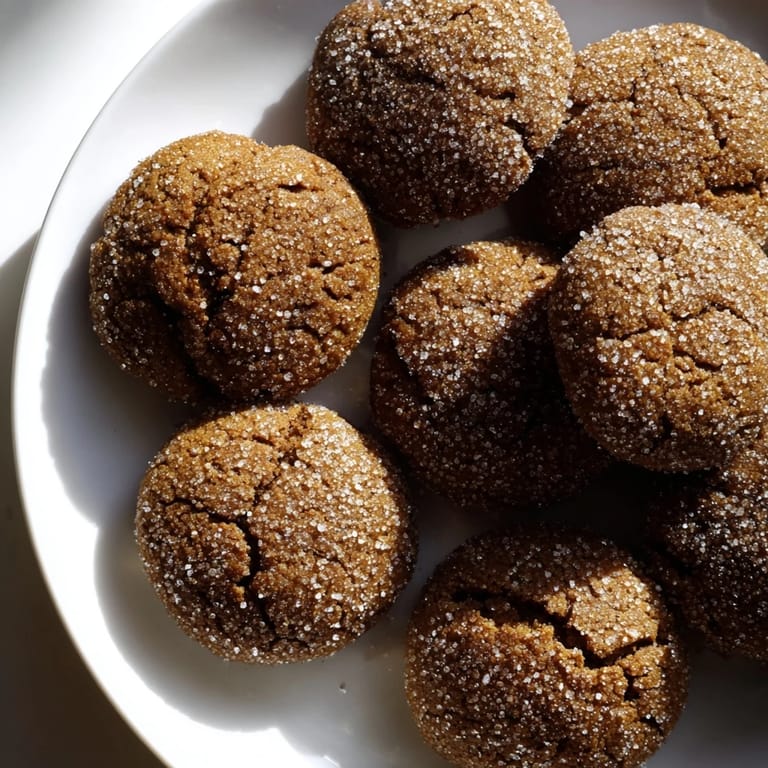
- Granulated sugar (1/4 cup for rolling): This creates that crackly, sparkly exterior that catches light and adds just a tiny bit of textural contrast.
Tired of Takeout? 🥡
Get 10 meals you can make faster than delivery arrives. Seriously.
One email. No spam. Unsubscribe anytime.
Instructions
- Set your stage:
- Preheat your oven to 350°F and line two baking sheets with parchment paper—this prevents sticking and makes cleanup almost effortless. If your baking sheets are dark or non-stick, cookies might brown faster, so keep an eye on them.
- Mix your spices:
- In a medium bowl, whisk together the flour, ginger, cinnamon, cloves, nutmeg, baking soda, and salt until everything is evenly distributed. You'll notice the mixture already smells incredible before anything else happens.
- Cream butter and sugar:
- Beat softened butter and brown sugar together until the mixture is noticeably lighter in color and fluffy, about 2 to 3 minutes. This step aerates the dough, which makes the cookies tender instead of dense.
- Add wet ingredients:
- Mix in the molasses, egg, and vanilla extract until well combined; the dough will look slightly separated at first, but keep mixing and it will come together beautifully.
- Bring it together:
- Add the dry ingredients to the wet mixture and fold everything together gently until just combined. Overmixing here will make the cookies tough, so stop as soon as you don't see streaks of flour.
- Shape and coat:
- Scoop tablespoon-sized portions of dough and roll them between your palms into balls, then roll each ball in granulated sugar until coated all over. The sugar coating will create that beautiful crackled finish as they bake.
- Space them out:
- Place dough balls about 2 inches apart on your prepared baking sheets; they'll spread slightly as they bake, and this space gives them room to do it gracefully.
- Bake with intention:
- Bake for 9 to 11 minutes, until the edges look set but the centers still look just slightly underdone—this is the difference between chewy and cake-like. If you like them softer, pull them at 9 minutes; if you prefer them firmer, go to 10 or 11.
- Cool carefully:
- Let the cookies rest on the baking sheet for 5 minutes after coming out of the oven, which helps them firm up just enough to handle. Then transfer them to a wire rack and let them cool completely; they'll continue to set as they cool.
 Pin It
 One quiet Tuesday morning, I made a batch just for myself, no occasion, no reason—just because I wanted something that tasted like autumn no matter what the calendar said. Sometimes the simplest moments of comfort don't need a story; they just need a warm cookie and strong coffee.
Why These Spices Work Together
The magic of these cookies is in how the spices layer and balance each other rather than competing. Ginger brings warmth and a slight bite, cinnamon adds sweetness and depth, cloves introduce a subtle earthiness, and nutmeg rounds everything out with a gentle spiced hug. The molasses acts as a bridge, connecting all these flavors into something that tastes like home to almost everyone. When you taste the dough, each spice should be present but none should overpower the others—that balance is what makes people reach for a second cookie.
The Chew Factor
Molasses cookies sit in a beautiful middle ground between crispy and soft, and achieving that chew comes down to a few specific choices. The combination of baking soda, brown sugar, and molasses creates moisture and structure that resists going hard or dry. Underbaking them by just a minute or two means the centers stay tender even as the edges set, giving you that perfect texture that keeps people coming back. You'll know you've got it right when the cookie breaks in half with a slight flex rather than snapping cleanly.
Storage and Keeping
These cookies stay chewy and fresh for about five days in an airtight container at room temperature, and they actually improve slightly as the flavors deepen and merge. If you need them to last longer, freeze them in a single layer on a baking sheet, then transfer to a freezer bag for up to three months—they thaw quickly at room temperature.
- Keep them separate from other cookies in storage, since their strong spice flavor can transfer to milder cookies.
- If they start to dry out, add a small piece of bread to the container overnight to restore moisture.
- These freeze beautifully as unbaked dough balls too, so you can bake fresh cookies whenever the craving hits.
 Pin It
 These cookies remind me that sometimes the best things in the kitchen are the ones that don't need perfecting, just making. Serve them warm with tea or coffee and watch what happens.
Recipe FAQs
- → What makes these cookies chewy?
The combination of molasses and slightly underbaking softens the texture, giving these cookies their signature chewiness.
- → Can I adjust the spice levels?
Yes, increasing or reducing ginger, cinnamon, or adding a pinch of black pepper can personalize the warmth and depth.
- → How should I store these cookies?
Keep them in an airtight container at room temperature to maintain softness for several days.
- → Is there a way to change the texture?
Swapping half the butter for vegetable shortening will result in a slightly different, less rich texture.
- → What is the best way to measure spices?
Use level teaspoons and measure carefully to preserve balance and avoid overpowering the flavor profile.
- → Can I make these gluten-free?
Substituting all-purpose flour with a gluten-free flour blend could work but might affect the texture; adjustments may be needed.