 Pin It
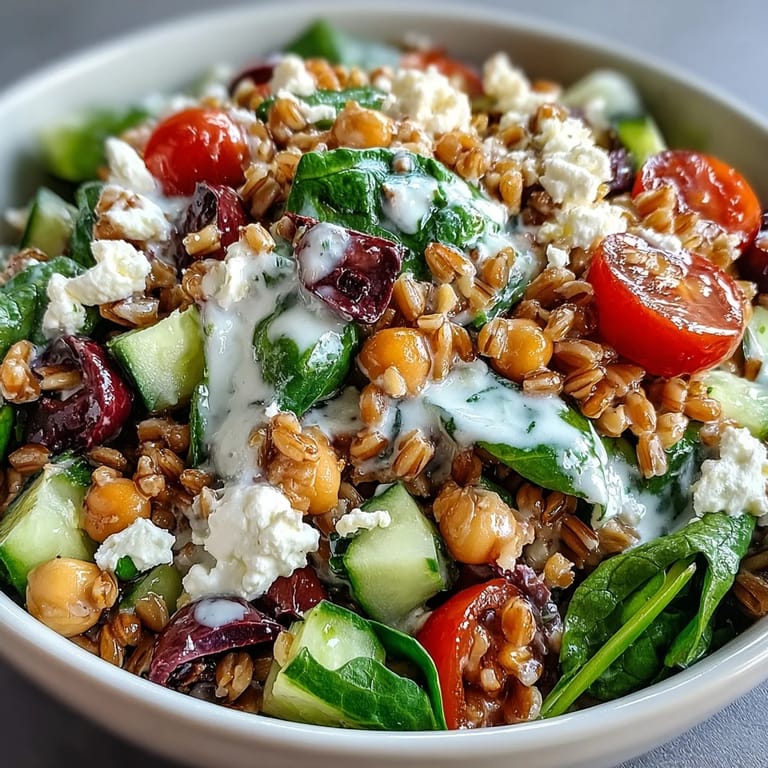
 There's something almost meditative about the moment when you're standing at the farmer's market on a warm afternoon, watching the vendor arrange ruby-red tomatoes in neat rows, and you suddenly think: I'm going to build something with all of this. That's when the Mediterranean farro bowl entered my kitchen—not from a cookbook, but from that spontaneous impulse to gather bright vegetables and let them speak for themselves over chewy, satisfying grains.
I made this for a dinner party last summer when my friend mentioned she was tired of the same salad rotations, and watching people go back for seconds—then thirds—felt like I'd unlocked something real. The bowl just disappeared from the table, and what stuck with me wasn't the compliments but the quiet satisfaction of eating something that felt both indulgent and honest.
Ingredients
- Farro, rinsed: This nutty grain holds its shape beautifully and has a tender bite that rice just can't match; rinsing removes any dusty debris and helps it cook more evenly.
- Vegetable broth: Quality matters here since it's one of only two cooking liquids; use something you'd actually drink on its own, not the metallic stuff in a can.
- Cherry tomatoes, halved: Their sweetness balances the earthiness of everything else, and halving them instead of dicing prevents them from disappearing into the bowl.
- Cucumber, diced: This adds a refreshing crunch that keeps the bowl from feeling heavy, even though it's quite filling.
- Red bell pepper, diced: Choose one that feels heavy and firm; the red ones are sweeter than green and add a subtle brightness.
- Kalamata olives, pitted and sliced: If you've never pitted your own olives, there's a trick: press them firmly with the flat of a knife and the pit practically falls out.
- Red onion, thinly sliced: The sharpness mellows as it sits, which is why this bowl improves with time.
- Baby spinach: It wilts slightly from the warm farro without needing to be cooked, adding earthiness without bitterness.
- Cooked chickpeas: Canned is fine if you drain and rinse them well; canned chickpeas from the start of the week are less mushy than fresh from the can.
- Tahini: Stir the jar well before using—the oil separates and that's where all the richness lives.
- Lemon juice: Fresh-squeezed makes a real difference; bottled tastes metallic by comparison.
- Extra-virgin olive oil: Don't save your good oil for the dressing—it's the highlight.
- Garlic clove, minced: Just one small clove is enough; raw garlic is potent and you want the dressing to taste like sesame and lemon, not garlic.
- Ground cumin: It echoes the earthiness of tahini and ties everything to Mediterranean flavors without announcing itself.
- Feta cheese, crumbled: The brininess is essential; it wakes up every other ingredient on the plate.
- Fresh parsley, chopped: Use it right before serving or it bruises and turns dark.
Tired of Takeout? 🥡
Get 10 meals you can make faster than delivery arrives. Seriously.
One email. No spam. Unsubscribe anytime.
Instructions
- Simmer the farro in aromatic broth:
- Pour the rinsed farro into a medium saucepan with the vegetable broth and bring it to a rolling boil—you'll hear it before you see it. Lower the heat, cover with a lid, and let it bubble away quietly for 25 to 30 minutes until the grains are tender but still have a slight chew to them.
- Prep your vegetables while farro cooks:
- This is the perfect time to dice, slice, and arrange everything on your cutting board in the order you'll need it. You'll feel calmer and more present when it's time to assemble.
- Whisk together the tahini dressing:
- In a small bowl, combine tahini, lemon juice, olive oil, water, minced garlic, and cumin, whisking until the mixture is pale and creamy. If it's too thick, add water one teaspoon at a time until you reach a consistency that coats the back of a spoon.
- Combine everything in a large bowl:
- Add the warm farro to your serving bowl along with all the prepped vegetables, chickpeas, and spinach, then drizzle the tahini dressing over top. Toss gently with your hands or two serving spoons so nothing breaks apart.
- Finish and serve:
- Divide the mixture among bowls and top each with a scatter of crumbled feta and fresh parsley. If you're making this ahead, store it in an airtight container and add the dressing and toppings just before eating.
 Pin It
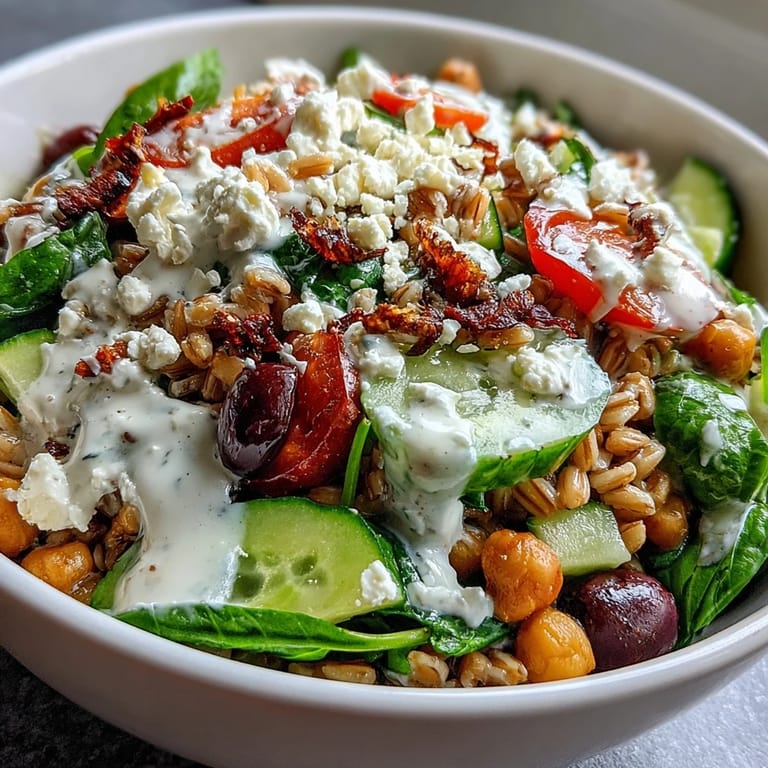
 The moment I understood why this bowl mattered came when my sister, who usually picks at composed salads, ate most of hers in silence and then asked for the tahini dressing recipe. It wasn't just about the ingredients—it was that she felt genuinely satisfied, like she'd eaten something real.
The Tahini Dressing Magic
This dressing is honestly worth the price of admission alone. The tahini gives it body and a subtle nuttiness, while lemon juice and garlic keep it bright, and that one whisper of cumin is the secret handshake that makes people say, 'What is in this?' without being able to pinpoint it. I've learned through trial and error that starting with less water and adding more as you whisk is smarter than trying to thin out a dressing that's already too runny.
Making It Your Own
The beauty of this bowl is that it welcomes improvisation without falling apart. Some seasons I add roasted eggplant or zucchini when the market has them cheap, other times I'll toss in grilled shrimp or chicken if there's leftover protein in the fridge. The farro and dressing stay constant, but the vegetables are a conversation with whatever's in season.
Meal Prep and Storage Wisdom
This bowl is a meal-prep dream because it doesn't wilt or get soggy the way leafy salads do. The farro actually absorbs the dressing flavors overnight, making day-two versions richer and more cohesive than the first serving. I keep the components separate if I'm prepping more than three days ahead—dressing in one container, everything else in another—so the acidity doesn't break down the vegetables before you're ready to eat.
- Store in airtight containers: The farro can dry out if exposed to air, so make sure your lid seals properly.
- Add garnishes just before eating: Feta and parsley are best fresh and not sitting in dressing.
- This keeps for up to three days: After that, the cucumber starts to weep and the tomatoes lose their snap.
 Pin It
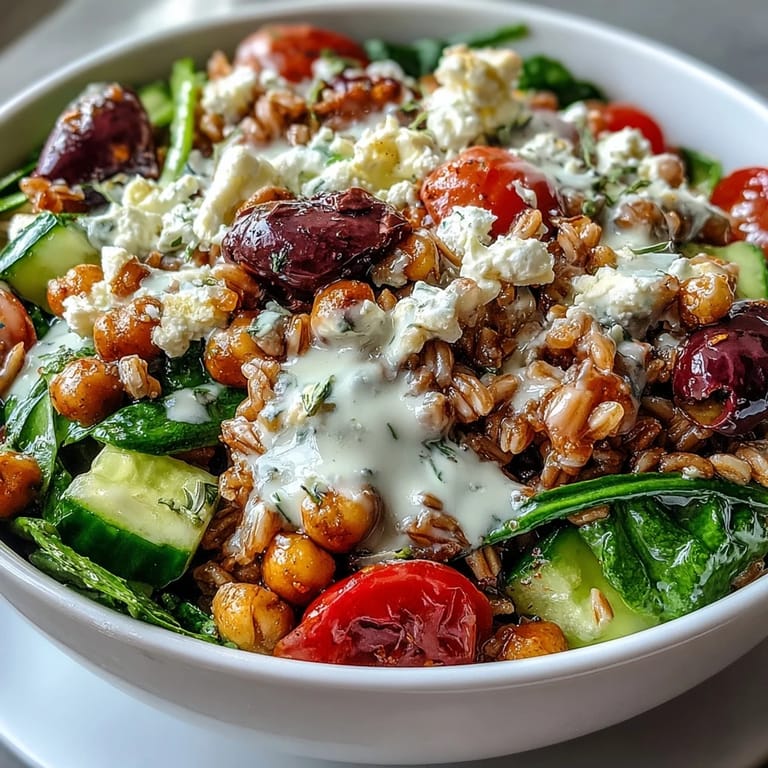
 This bowl has become the dish I make when I want to feed people something that tastes like care without announcing how much effort it took. That's the whole point.
Recipe FAQs
- → What is the best way to cook farro for this bowl?
Simmer farro gently in vegetable broth for 25-30 minutes until tender but still chewy. Drain any excess liquid and let it cool slightly before mixing.
- → Can I substitute the protein in this dish?
Yes, chickpeas work well for a plant-based option, while grilled chicken, tofu, or shrimp can be used for non-vegetarian variations.
- → How can I make the dish vegan-friendly?
Simply omit the feta cheese or substitute with a vegan alternative to keep the creamy texture without dairy.
- → What tips help make the tahini dressing smooth?
Whisk tahini with lemon juice, olive oil, water, garlic, and spices, adding water gradually until the dressing reaches a creamy, pourable consistency.
- → Are there suggested add-ins to enhance flavor?
Roasted eggplant or zucchini can add sweetness and depth, while fresh parsley adds brightness as a garnish.