 Pin It
 There's something about the sizzle of marinated chicken hitting a hot skillet that makes you feel like you're cooking in a sun-drenched taverna somewhere along the Aegean coast. My first gyro attempt came on a random Tuesday when I had chicken thighs, a lemon in the fruit bowl, and an overwhelming craving for something fresh but satisfying. I threw together what I thought was a marinade, cooked it up, and realized I'd stumbled onto something that tastes remarkably close to what I'd been paying restaurant prices for all these years.
I made these gyros for my sister last summer when she was going through a phase of eating out too much, and watching her face light up when she bit into one felt like winning something. She kept asking what restaurant I'd ordered from until I casually mentioned I'd made it at home, and the way her skepticism turned into genuine surprise is a memory I still think about. Now she texts me for the recipe before planning her own dinner parties.
Ingredients
- Extra-virgin olive oil: Use the good stuff you actually enjoy tasting, because this is where it shines—in the marinade and the tzatziki where it's not hidden under other flavors.
- Fresh lemon juice: Bottled will technically work, but fresh lemons give this brightness that makes the whole dish taste like it's from somewhere warm and Mediterranean.
- Garlic: Mince it yourself right before mixing the marinade; pre-minced garlic loses that punch that makes this recipe sing.
- Dried oregano and thyme: These are the backbone of the flavor profile, so don't skimp or use stale spices from the back of your cabinet.
- Chicken thighs: They're more forgiving than breasts and stay tender even if you accidentally overcook them slightly, which is why I always reach for them now.
- Full-fat Greek yogurt: The fattier version makes the tzatziki creamy and luxurious instead of thin and disappointing.
- Feta cheese: Crumble it yourself if you have time; the texture works better than pre-crumbled cheese that's been sitting in a package.
- Cucumber: This is crucial—you must squeeze out every drop of water or your tzatziki turns into soup, which I learned the hard way.
- Fresh dill: If you can only find dried, use half the amount because it's stronger and can easily overpower the delicate yogurt base.
Tired of Takeout? 🥡
Get 10 meals you can make faster than delivery arrives. Seriously.
One email. No spam. Unsubscribe anytime.
Instructions
- Build your flavor base:
- Whisk together the olive oil, lemon juice, minced garlic, oregano, thyme, paprika, cumin, and cayenne in a large bowl until it looks like a thin golden paste. The spices should be evenly distributed so every piece of chicken gets the same kiss of flavor when you toss it in.
- Marinate the chicken:
- Add your sliced chicken to the marinade and toss it around until every piece is coated, then cover the bowl and let it hang out in the fridge for at least 30 minutes. If you have time and remember, let it sit overnight—the flavors deepen in a way that makes you realize why restaurant gyros taste so good.
- Prep the tzatziki while you wait:
- Wrap your grated cucumber in a clean kitchen towel and squeeze it like you're wringing out the ocean itself—this step is what keeps your sauce thick and creamy instead of watery. Combine the drained cucumber with Greek yogurt, crumbled feta, minced garlic, lemon juice, olive oil, and fresh dill in a bowl, stir until smooth, taste it, and adjust the salt and pepper until it feels balanced on your tongue.
- Get your pan ready:
- Heat a large skillet over medium-high heat until it's hot enough that a drop of water sizzles immediately when it hits the surface. If your pan isn't nonstick, add just a drizzle of olive oil so the chicken gets some color without sticking.
- Cook the chicken until charred:
- Remove the chicken from the marinade, letting excess liquid drip back into the bowl, then lay the slices in a single layer in the hot pan. Resist the urge to move them around—let them sit for 5 to 7 minutes until the edges turn golden and slightly charred, then flip and cook the other side until the chicken is cooked through but still tender.
- Rest and slice:
- Transfer the cooked chicken to a cutting board and give it a 5-minute rest so the juices can settle back in. Slice it into thin strips that will nestle nicely into your pita.
- Warm your pitas:
- While the chicken rests, run your pita breads through a dry skillet for just a minute or two per side, or wrap them in foil and warm them gently in a low oven. A warm pita makes all the difference in how the whole gyro comes together.
- Assemble with intention:
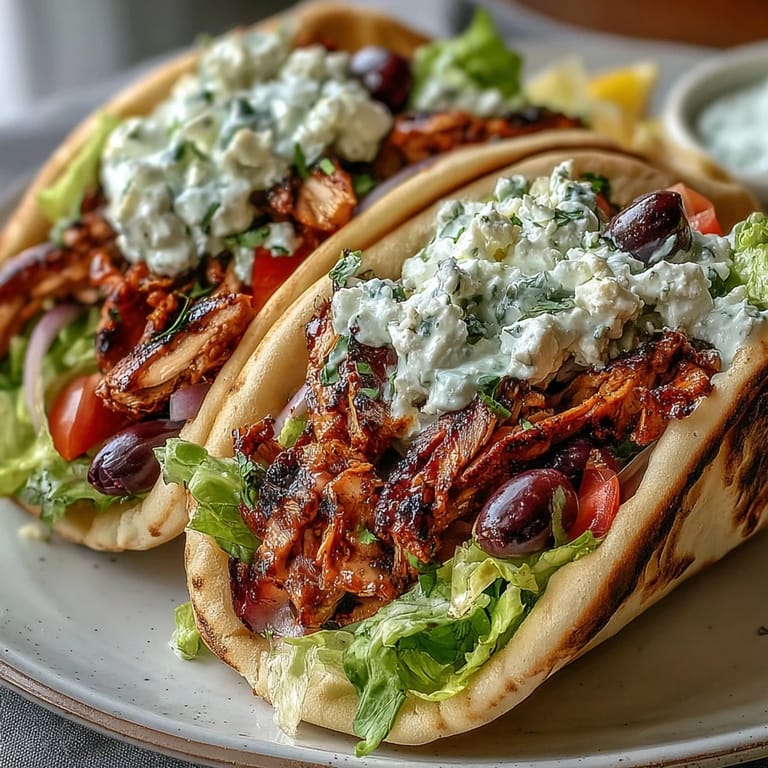
- Lay each warm pita on a plate, spread a generous spoonful of creamy feta tzatziki right down the middle, then layer on lettuce, tomatoes, red onion, and Kalamata olives. Top with your sliced chicken, add another generous drizzle of tzatziki, and finish with fresh parsley or mint leaves.
 Pin It
 The best part of making these gyros is watching people eat them—there's something about biting into a warm pita loaded with charred chicken and cool, creamy tzatziki that makes everyone pause for a second, like they're tasting something they didn't expect to be this good. It turns an ordinary dinner into something that feels a little bit special, which is honestly all I want from cooking anymore.
The Magic of Marinating
When you give chicken time to sit in this marinade, the acid from the lemon juice and the aromatics from the garlic and spices don't just coat the surface—they actually start to change the texture of the meat, making it more tender and flavorful than if you'd cooked it the same day. I used to think longer marinading times were just a nice-to-have, but once I tasted the difference between a 30-minute marinate and an overnight one, I became a believer. Even 2 hours makes a noticeable difference if you're in a time crunch.
Why Feta Tzatziki Changes Everything
Traditional tzatziki is already wonderful, but adding crumbled feta takes it from good to something you'll find yourself eating with a spoon straight from the bowl when nobody's watching. The feta adds a salty, tangy depth that plays beautifully against the cool, creamy yogurt base and the brightness of the fresh dill and lemon. Once you've made it this way, going back to plain yogurt-based versions feels like missing an ingredient you didn't know you needed.
Build Your Gyro, Element by Element
The assembly matters as much as the cooking does—each component brings something different to the table, and layering them thoughtfully means every bite has multiple textures and flavors working together. The cool lettuce and tomatoes balance the warmth of the chicken, the olives add a briny little pop, and the red onion brings a sharp, almost spicy note that ties everything together. Think of building your gyro like you're composing a small meal rather than just stacking ingredients, and the whole experience becomes more intentional and delicious.
- Spread the tzatziki first so it acts as a barrier between the warm pita and the fillings, keeping everything from getting soggy.
- Layer the raw vegetables before the chicken so they maintain their crispness and don't get wilted by the heat.
- Always serve with lemon wedges—that last squeeze of fresh juice right before you eat makes everything taste brighter and more alive.
 Pin It
 These gyros feel fancy enough for company but casual enough to throw together on a random weeknight when you want something that tastes like you tried harder than you actually did. Once you make them once, you'll find yourself coming back to them again and again.
Recipe FAQs
- → What makes the tzatziki sauce creamy?
The combination of thick Greek yogurt and crumbled feta cheese creates an exceptionally creamy texture. Squeezing excess moisture from grated cucumber prevents the sauce from becoming watery, while fresh dill and garlic add bright Mediterranean flavor.
- → Can I use chicken breasts instead of thighs?
Absolutely. Thinly sliced chicken breasts work well, though thighs remain more juicy during cooking. Pound breasts slightly to even thickness, reduce cooking time by 1-2 minutes per side, and watch closely to prevent drying.
- → How long should the chicken marinate?
Minimum 30 minutes for basic flavor penetration, but 2-4 hours delivers significantly better results. Overnight marinating creates the most flavorful, tender chicken. The acidic lemon juice gently breaks down fibers while aromatics infuse deeply.
- → What sides pair well with these gyros?
Greek lemon roasted potatoes, village salad (horiatiki), or roasted vegetables complement beautifully. A simple cucumber salad with red wine vinegar also works. Extra tzatziki makes an excellent dip for warm pita triangles.
- → Can the tzatziki be made ahead?
Yes, prepare up to 3 days in advance and store tightly covered. Flavors meld and improve overnight. Give it a good stir before serving as some liquid separation occurs naturally. Avoid freezing as texture becomes grainy.