 Pin It
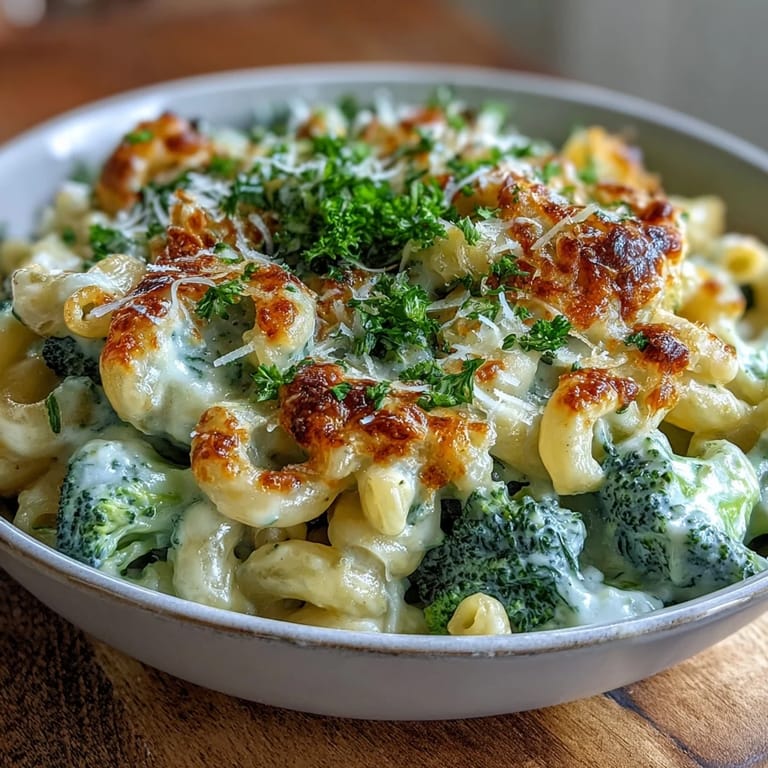
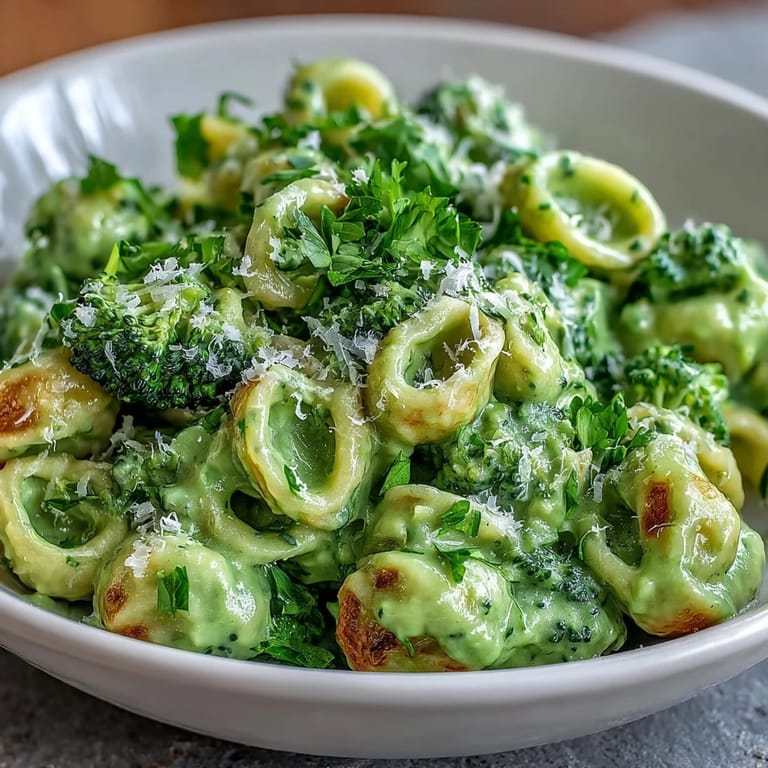
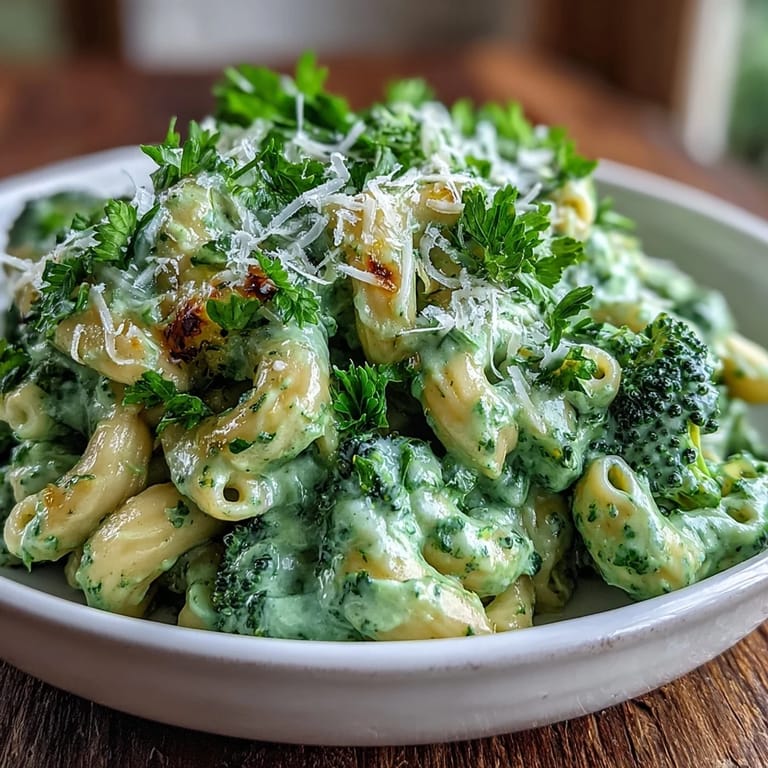
 My sister called me on a Tuesday afternoon, frustrated that her kids wouldn't touch vegetables. By Thursday, I'd transformed her kitchen with this bright green mac and cheese, and suddenly broccoli wasn't the enemy anymore. The spinach blends so seamlessly into the cheese sauce that you get all the nutrition without any of the vegetable texture that kids tend to resist. Watching her youngest ask for seconds was worth every minute of prep work.
There was an evening when I made this for a friend going through a rough patch, and she sat at my kitchen counter just watching the pasta cook, breathing in the nutmeg-threaded steam. Comfort food isn't always about the taste—sometimes it's about someone showing up for you with something warm and green and honest. She still texts me asking for the recipe whenever she needs a quiet dinner at home.
Ingredients
- Elbow macaroni (340 g): Short, sturdy pasta holds the sauce beautifully and cooks evenly, though you can use penne or fusilli if that's what you have on hand.
- Fresh spinach (200 g): The wilting happens fast, so don't worry if it looks like too much at first—it collapses down to almost nothing once heat hits it.
- Broccoli florets (200 g): Adding these in the last two minutes of pasta cooking saves a pan and keeps them from turning mushy.
- Small onion: Chopped fine, it dissolves into sweetness and builds the foundation of your sauce without announcing itself.
- Garlic (2 cloves): Minced rather than whole cloves, giving you those tiny pockets of flavor throughout.
- Unsalted butter (2 tbsp): This is your roux base, so use actual butter and not a substitute—it matters.
- All-purpose flour (2 tbsp): Works as your thickening agent; whisk it in carefully to avoid lumps taking over your sauce.
- Whole milk (500 ml): Full-fat milk creates a silkier sauce than low-fat versions, and the difference is noticeable.
- Sharp cheddar cheese (120 g): The star player—sharp varieties have more personality than mild, giving your sauce a depth that younger cheddars can't match.
- Parmesan cheese (60 g): Grated fresh tastes infinitely better than the pre-grated stuff with its anti-caking powder.
- Mozzarella cheese (60 g): This brings creaminess and stretch, balancing the sharpness of the cheddar.
- Salt and pepper: Season to your taste—you're building layers here, not just dumping in everything at once.
- Ground nutmeg: A whisper of nutmeg in cheese sauce is tradition, though you can skip it if the idea doesn't appeal.
- Dijon mustard (1 tsp): This deepens the cheese flavor without making anything taste mustard-y, a trick I learned from a French cooking class.
Tired of Takeout? 🥡
Get 10 meals you can make faster than delivery arrives. Seriously.
One email. No spam. Unsubscribe anytime.
Instructions
- Set your pasta water going:
- Fill a large pot with salted water—make it taste like the ocean, my grandmother used to say—and let it come to a rolling boil before adding your macaroni. The salt flavors the pasta itself, not just cooking it from the outside in.
- Cook pasta and broccoli together:
- Follow the package timing for your pasta, then drop in the broccoli florets in the last two minutes so they soften but stay bright green. Drain everything together, set it aside in a bowl, and don't rinse it—the starch helps the sauce cling.
- Wilt the spinach:
- While your pasta is cooking, heat a large skillet over medium heat and add your spinach all at once, stirring for about two minutes until it collapses into itself. The leaves go from stiff and dark to limp and glossy—you'll know it's ready when it looks almost wet.
- Build your flavor base:
- In that same skillet, melt your butter and add the chopped onion, letting it soften for three to four minutes until it's sweet and translucent. Add minced garlic and cook for just one more minute—garlic burns easily, so watch it carefully.
- Make your roux:
- Sprinkle the flour over your onion mixture and stir for about a minute, letting it toast slightly in the butter. This cooked flour is what thickens your sauce, and skipping this step or rushing it leads to lumpy results.
- Add milk and build the sauce:
- Gradually pour in your milk while whisking constantly—this is the secret to avoiding lumps. Keep stirring and let it simmer until it thickens enough to coat the back of a spoon, about four to five minutes.
- Melt in the cheese:
- Remove from heat and add all three cheeses, along with salt, pepper, nutmeg, and Dijon mustard, stirring until everything melts into one glossy, unified sauce. Taste and adjust seasoning—you might want more salt depending on how salty your broth was.
- Blend in the spinach:
- Transfer about half of your cheese sauce to a blender with the wilted spinach and blend until completely smooth and a bright, slightly emerald green. This technique keeps the spinach invisible while the blended sauce distributes evenly throughout the pasta.
- Combine everything:
- Pour your spinach-sauce mixture back into the skillet with the remaining cheese sauce and stir gently until it's one cohesive color. Add your drained pasta and broccoli and fold everything together gently until every piece is coated.
- Finish with heat:
- Warm everything through over gentle heat, stirring occasionally so nothing sticks to the bottom. Serve immediately while it's still creamy and hot, topped with fresh parsley and extra Parmesan if you're feeling generous.
 Pin It
 The moment I realized this dish worked came when my friend's youngest asked what made the mac and cheese green, then ate three helpings without noticing. That's when I understood it wasn't about tricking anyone—it was about making vegetables so integrated into something delicious that they stopped being a separate thing entirely. Food became play, and dinner became a small victory.
Why Blending Changes Everything
Most green pasta dishes dump in chopped spinach and hope no one notices the texture. Blending it transforms spinach into sauce, meaning it distributes evenly and nobody can separate it out if they wanted to. I discovered this trick when I was trying to hide greens from a picky eater and realized the method works even when you're not trying to hide anything—it just makes the dish more elegant and unified.
The Three-Cheese Strategy
Using one cheese alone gives you a one-note flavor, but layering sharp cheddar, nutty Parmesan, and creamy mozzarella creates something more interesting than any single choice could be. Sharp cheddar brings personality, Parmesan adds complexity and a slight tang, and mozzarella keeps everything silky instead of heavy. Think of them as three singers in harmony rather than three separate solos.
Taking It Further
This recipe is flexible in ways that comfort food should be, bending to what you have available and what your particular kitchen needs. The basic sauce technique stays the same—butter, flour, milk, cheese—whether you're adding spinach, kale, peas, or mushrooms. Season boldly at the end because mac and cheese fades as it cools, and you want the flavors to carry through even when it's not piping hot.
- For a baked version, transfer to a casserole dish, top with breadcrumbs mixed with butter and extra cheese, and bake at 200°C for ten to fifteen minutes until the top turns golden brown.
- Swap spinach for kale, chard, or even peas if that's what your garden or farmer's market offers.
- Make it gluten-free by using gluten-free pasta and cornstarch instead of wheat flour for thickening.
 Pin It
 This recipe lives in that perfect space between indulgent and nourishing, between simple enough for a Tuesday night and impressive enough to serve guests. Make it once and it becomes something you return to over and over.
Recipe FAQs
- → Can I swap spinach for other greens?
Yes, kale or peas make excellent substitutes that will complement the creamy cheese sauce well.
- → How do I achieve the vibrant green color in the sauce?
Blending fresh spinach into the cheese sauce before combining it with the pasta creates the bright green hue.
- → Is it possible to bake this dish?
Absolutely. Transfer to a baking dish, top with breadcrumbs and extra cheese, then bake at 200°C (400°F) for 10-15 minutes until golden.
- → What pasta type works best?
Elbow macaroni or short pasta shapes hold the sauce well and cook evenly in this dish.
- → Can this dish be made gluten-free?
Yes, using gluten-free pasta and flour allows for a gluten-free version without compromising flavor.
- → How do I prevent lumps in the cheese sauce?
Whisking constantly while gradually adding milk and cooking until thickened helps create a smooth, lump-free sauce.