 Pin It
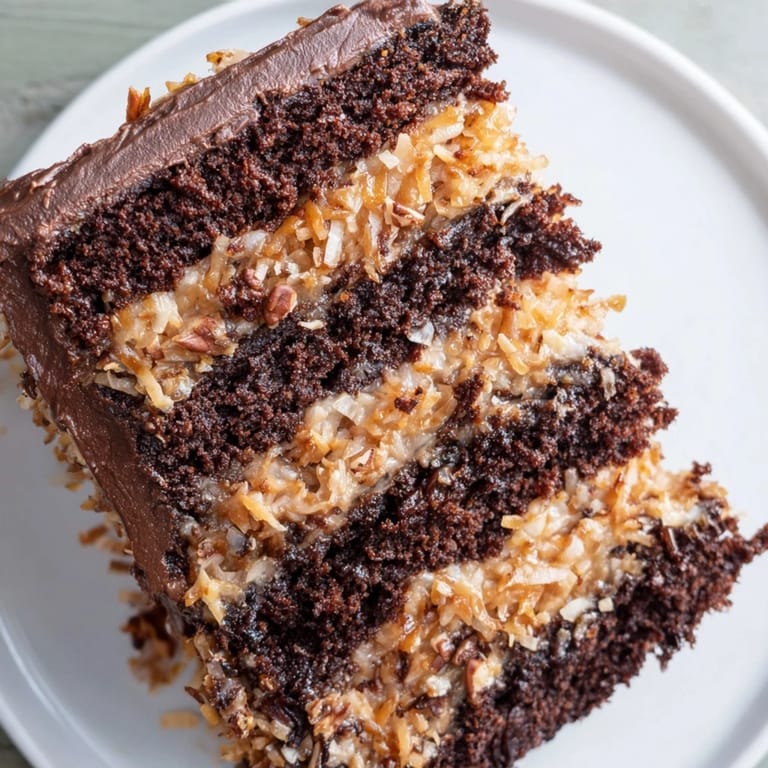
 My grandmother had this cake waiting on the kitchen counter every time we'd visit during the holidays, and I remember being absolutely mesmerized by the way the coconut-pecan frosting caught the light. Years later, when I finally worked up the courage to ask for her recipe, she laughed and handed me a worn index card with notes scrawled in the margins. Turns out, this German chocolate cake wasn't actually German at all—it was born from a Texas baker's love affair with a bar of German's sweet chocolate back in 1957. Making it for the first time, I understood why it's remained such a beloved classic: the cake itself is impossibly moist, almost fudgy, and that frosting is pure indulgence.
I baked this for my friend's birthday after she mentioned offhandedly that she'd never had homemade German chocolate cake, and watching her eyes light up when she took that first bite made me realize some things are worth the extra effort. She kept asking if I'd bought it from a bakery, and I loved that moment of standing in her kitchen, slightly flushed from the oven heat, knowing I'd nailed something special.
Ingredients
- All-purpose flour (2 cups): The foundation of the cake, and it needs to be whisked thoroughly with the dry ingredients to avoid lumps that can catch mid-bake.
- Granulated sugar (1¾ cups): This is what gives the cake its subtle sweetness before the frosting arrives; don't skimp on quality here.
- Unsweetened cocoa powder (¾ cup): The backbone of the chocolate flavor—I learned the hard way that Dutch-process and natural cocoa powder behave differently, so stick with unsweetened natural cocoa.
- Baking powder and baking soda (1½ teaspoons each): This combination helps the cake rise evenly and keeps it tender rather than cakey.
- Salt (1 teaspoon): Brings out the chocolate notes and balances the sweetness beautifully.
- Large eggs (2), at room temperature: Room temperature eggs mix more smoothly and create a better crumb structure than cold ones.
- Whole milk (1 cup), at room temperature: The liquid that keeps everything moist and tender throughout the baking process.
- Vegetable oil (½ cup): Oil creates a tender, moist crumb that butter alone can't quite achieve in chocolate cakes.
- Vanilla extract (2 teaspoons): Amplifies the chocolate flavor and adds a whisper of warmth to the finished cake.
- Boiling water (1 cup): This seems counterintuitive, but the hot water dissolves the cocoa fully and creates that signature moist texture that makes this cake unforgettable.
- Evaporated milk (1 cup): This concentrated milk is the secret to the frosting's rich, glossy texture that you simply can't replicate with regular milk.
- Granulated sugar (1 cup, for frosting): Sweetens the frosting while helping it reach that perfect spreadable consistency.
- Large egg yolks (3): These act as an emulsifier and enricher, creating a silky frosting that coats the cake beautifully.
- Unsalted butter (½ cup, cubed): Creates the creamy base of the frosting; cubing it helps it melt evenly into the warm mixture.
- Vanilla extract (1 teaspoon): A gentle vanilla note in the frosting that doesn't overwhelm the coconut and pecan flavors.
- Sweetened shredded coconut (1⅓ cups): This is what makes the frosting sing—use the finely shredded variety for a more refined texture in every bite.
- Chopped pecans (1 cup): Toasted pecans add a depth of flavor, but even raw ones bring a satisfying crunch and earthy richness to the frosting.
Tired of Takeout? 🥡
Get 10 meals you can make faster than delivery arrives. Seriously.
One email. No spam. Unsubscribe anytime.
Instructions
- Prepare your stage:
- Preheat your oven to 350°F (175°C) and take a moment to grease and flour three 9-inch round cake pans thoroughly. I like to run my fingers around the edges to make sure every corner is coated, because nothing's worse than a cake that sticks halfway through turning it out.
- Mix the dry team:
- In a large bowl, whisk together the flour, sugar, cocoa powder, baking powder, baking soda, and salt. The whisking is key here—it aerates everything and helps distribute the leavening agents evenly so your cake rises uniformly.
- Add the wet ingredients:
- Create a little well in the center of your dry ingredients and add the eggs, milk, oil, and vanilla. Beat on medium speed for about 2 minutes; you'll hear the mixer working and feel the batter coming together into something glossy and smooth.
- The hot water moment:
- Stir in the boiling water very gently—yes, the batter will look startlingly thin, almost like chocolate soup. This is exactly right and exactly why the cake turns out so moist and tender.
- Into the pans:
- Divide the batter evenly among your three prepared pans. I use a rubber spatula to scrape every last bit from the bowl because these thin batters need every bit of coverage.
- Bake with patience:
- Bake for 30 to 35 minutes, or until a toothpick inserted in the center comes out clean. The kitchen will smell like a chocolate dream, and that's when you know everything's happening perfectly.
- Cool with intention:
- Let the cakes cool in their pans for 10 minutes—this is crucial, as it allows them to set slightly without becoming brittle. Then turn them out gently onto wire racks and let them cool completely, which takes about an hour.
- The frosting foundation:
- In a medium saucepan over medium heat, whisk together the evaporated milk, sugar, egg yolks, and butter. Watch as it slowly transforms, the butter melting into the mixture and the egg yolks cooking gently.
- Stir until magic happens:
- Stir constantly for about 12 minutes until the frosting thickens enough to coat the back of a spoon. You'll feel when it's right—it goes from loose to silky to something that clings to your spoon.
- Add the soul:
- Remove from heat and stir in the vanilla, coconut, and pecans. The mixture will be warm and glossy at this point, almost like a caramel.
- Cool for spreadability:
- Spread the frosting over the cooled cake layers once it's cooled enough to hold its shape, about 30 minutes. If you're impatient like me, you can place the saucepan in an ice bath to speed things up.
- Build your masterpiece:
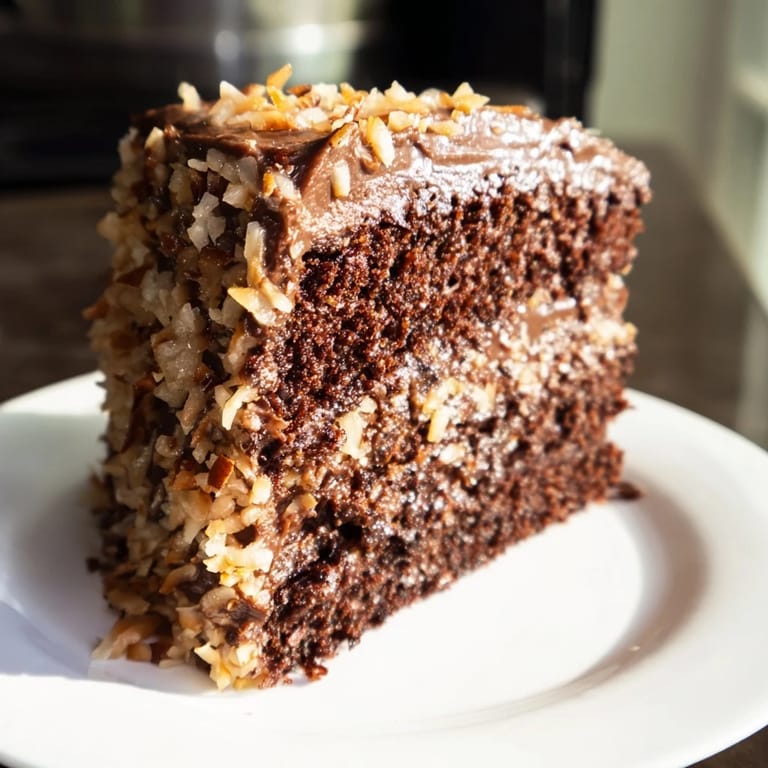
- Place one cake layer on a serving plate and spread about one-third of the frosting over the top. Repeat with the second layer, then top with the final layer and remaining frosting, letting some drip down the sides if you like.
 Pin It
 There's something almost sacred about serving a homemade German chocolate cake—the way people slow down and actually taste each layer, how conversations pause for a moment of appreciation. That's when you know you've created something beyond dessert.
Why This Cake Endures
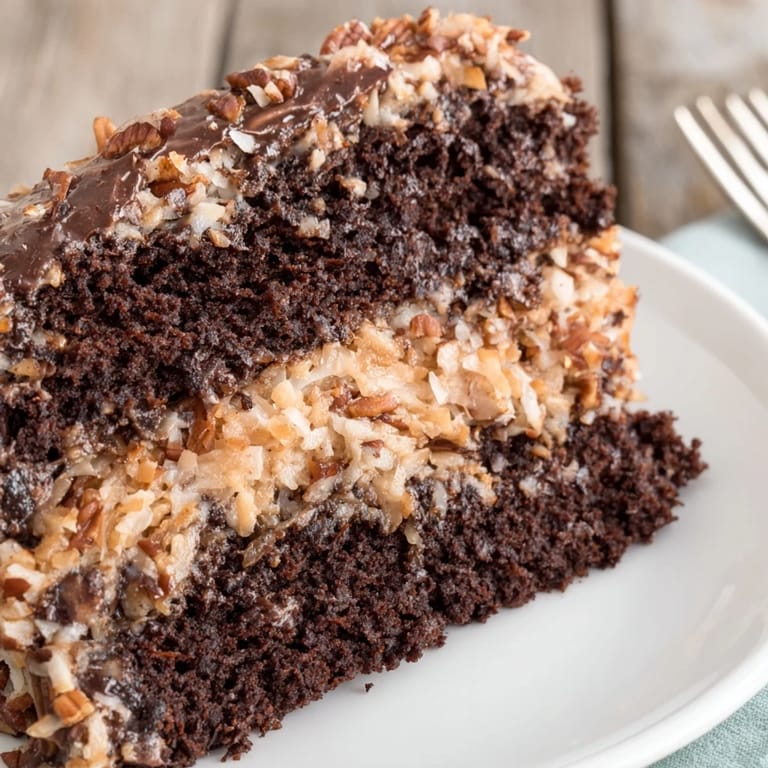
This cake has been beloved for over sixty years because it strikes an almost impossible balance: it's decadent without being heavy, rich without being cloying, and the combination of moist chocolate cake with that caramelized coconut-pecan frosting creates a complexity that simple cakes just can't match. Every element serves a purpose, from the boiling water that keeps the cake tender to the cooked frosting that adds depth and a hint of caramel notes.
Storage and Make-Ahead Tips
This cake actually improves after a day or two, as the flavors meld and the frosting sets more firmly, making it easier to slice. You can bake the cake layers a day ahead and store them wrapped in plastic wrap at room temperature, then assemble everything the day you plan to serve it.
Variations and Customizations
While the classic version is perfect as-is, there's room to play around the edges if you're feeling creative. Some people add a hint of coffee to the cake batter to deepen the chocolate notes, while others toast their pecans first to amplify their richness. For a less sweet frosting, you can substitute unsweetened shredded coconut, and a drizzle of melted dark chocolate over the top adds an extra layer of elegance.
- Toast the pecans in a dry skillet for a few minutes before adding them to the frosting for extra depth.
- A touch of espresso powder in the cake batter (just ¼ teaspoon) enhances the chocolate without making it taste like coffee.
- For a showstopper presentation, pipe rosettes of frosting between the layers for more visual drama.
 Pin It
 This German chocolate cake is the kind of recipe that reminds us why we bake—not out of obligation, but because the result brings genuine joy to the people we care about. Make it whenever you want to feel like someone's favorite person in the room.
Recipe FAQs
- → What makes the frosting creamy and textured?
The frosting combines evaporated milk, egg yolks, butter, shredded coconut, and chopped pecans, cooked until thickened, creating a rich, textured topping.
- → How can I ensure the cake layers are moist?
Using boiling water in the batter and properly measuring ingredients helps achieve a tender and moist crumb in the chocolate layers.
- → Can this dessert be made ahead of time?
Yes, baking the layers and preparing the frosting in advance allows flavors to meld; cake can be stored refrigerated for freshness.
- → What type of pans are recommended for baking?
Three 9-inch round cake pans are ideal for evenly baking the layers to the desired thickness and texture.
- → Are there options for adjusting the sweetness of the frosting?
Using unsweetened shredded coconut instead of sweetened can reduce overall sweetness in the frosting.
- → How should the layers be assembled?
Spread a third of the frosting between each cooled cake layer and cover the top; sides can be frosted if preferred.