 Pin It
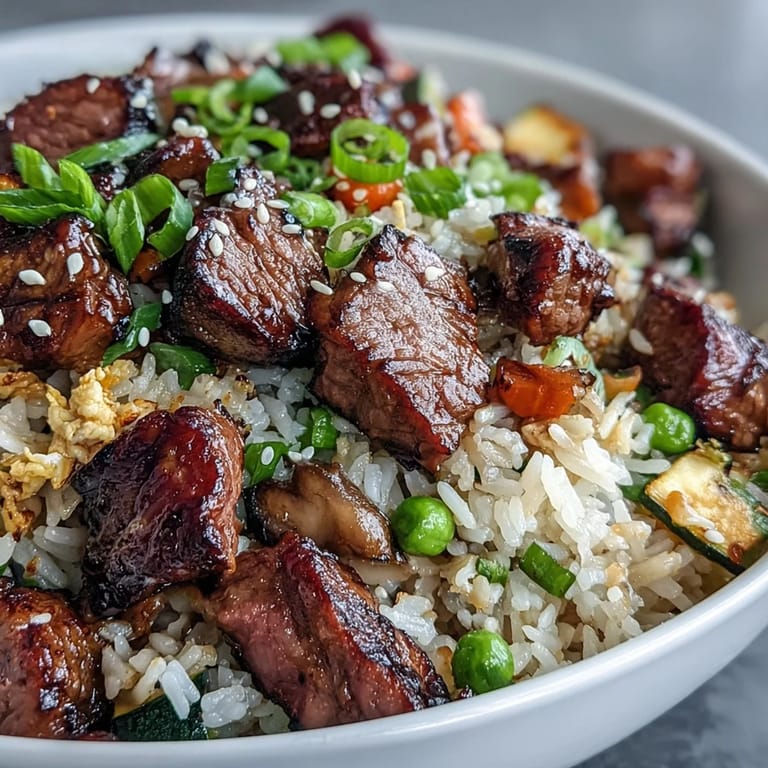
 There's something almost magical about the sizzle of steak hitting a hot pan while rice tumbles and vegetables glisten with butter—it's the sound of a hibachi chef's theater happening right in your own kitchen. My neighbor mentioned she'd been ordering takeout every Friday night, dropping serious cash on those teppanyaki places, and I realized I could recreate that same energy on a weeknight with just one skillet and about 35 minutes. The first time I nailed this dish, my kids actually asked for seconds instead of disappearing to their rooms, which felt like winning the lottery. What started as a weeknight shortcut became something we crave, and honestly, the cleanup is so minimal that I don't even mind making it twice a week.
I'll never forget cooking this for my friend Marcus on a random Tuesday when he stopped by exhausted from a double shift—he walked in, smelled the sesame oil and garlic hitting the pan, and just sat on my counter waiting. When he tasted it, he went quiet for a moment, then asked if I'd ever consider meal prepping for other people because this tasted like a restaurant where you'd spend $28 per plate. That compliment meant more than any fancy review could, because it came from someone who just needed to feel cared for.
Ingredients
- Sirloin steak, cubed: Choose a cut with a bit of marbling so it stays tender and flavorful even with quick cooking; I learned the hard way that lean cuts can turn chewy.
- Low-sodium soy sauce: This is your umami backbone, so don't skip it, but low-sodium means you control the salt level instead of the sauce controlling you.
- Mirin or dry sherry: The sweetness balances the salty soy and adds a subtle gloss to everything; mirin is the authentic choice, but sherry works in a pinch.
- Sesame oil: Use the toasted kind—it's the scent that makes people ask what smells so good before they even sit down.
- Day-old jasmine rice: This is non-negotiable; fresh rice breaks apart and turns into mushy clumps, but cold rice from yesterday fries up into those perfect separated grains.
- Mixed vegetables: Onion, carrots, zucchini, and mushrooms give you texture variety and natural sweetness that plays nicely against the savory steak.
- Eggs: They add richness and bind everything together without making it feel heavy.
- Butter: Those final two tablespoons are where the magic happens—they create little crispy bits and tie all the flavors together.
- Green onions: Fresh and bright at the end, they're like a little wake-up call for your palate.
Tired of Takeout? 🥡
Get 10 meals you can make faster than delivery arrives. Seriously.
One email. No spam. Unsubscribe anytime.
Instructions
- Build your marinade while you breathe:
- Mix soy sauce, mirin, sesame oil, minced garlic, and black pepper in a bowl, then add your steak cubes and let them sit. Those 10 minutes aren't wasted time—they're when you slice your vegetables and get your workspace ready, so you're actually moving at the speed of the cooking itself.
- Sear the steak until it's a little shy of done:
- Heat oil in your skillet over medium-high heat and let it shimmer before adding the steak—you want it to sizzle, not apologize. Cook for 2–3 minutes, stirring occasionally so it gets browned on the outside but stays tender inside, then pull it out and set it aside.
- Quickly soften the vegetables:
- Add fresh oil to the same pan and throw in your onion, carrots, zucchini, and mushrooms; they should go from raw to just-tender in about 4–5 minutes, still holding a little bite. Don't walk away—this is when things can shift from tender to overcooked in about 30 seconds.
- Create a scrambled egg moment:
- Push your vegetables to one side, pour beaten eggs into the empty space, and let them cook until just set, then gently scramble them in. The eggs should still be a little soft because they'll keep cooking as you mix everything together.
- Bring it all back together:
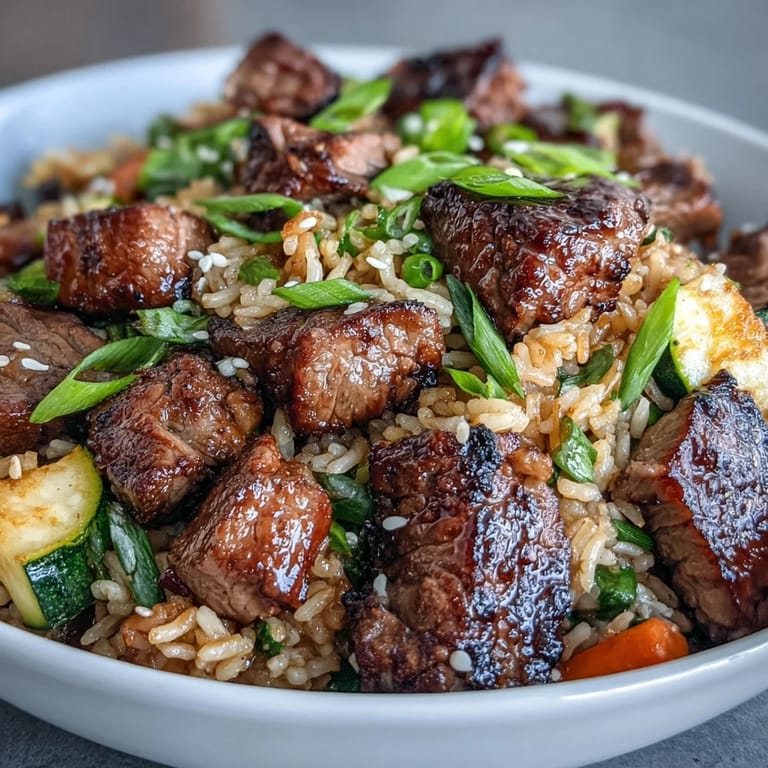
- Add the rice, peas, and cooked steak back to the pan, drizzle with soy sauce, and toss everything like you mean it, breaking up any rice clumps. This is the moment it all starts smelling like a hibachi restaurant.
- Finish with butter and green onions:
- Stir in the butter and half your green onions, then cook for another 2–3 minutes until everything is heated through and you see little crispy bits forming on the bottom. This is when you taste for salt and pepper and add what's needed to make it sing.
 Pin It
 There's a moment that happens almost every time I make this—when my partner walks past the stove and just closes their eyes to breathe in the smell, then wraps their arms around me from behind without saying anything. That's when food stops being about dinner and becomes about the feeling of being home.
Why Day-Old Rice Actually Changes Everything
I used to think the rice difference was exaggerated until I made this dish with freshly cooked rice and ended up with something that felt more like congee than fried rice. The moisture in warm rice creates steam, which makes the grains stick together and turn soft instead of frying into those beautiful separate, slightly crispy pieces that make the dish feel restaurant-quality. Now I cook extra jasmine rice the night before specifically for this purpose, and it's become a ritual that actually saves me time on the cooking night.
The Secret to Steak That Stays Tender
The key is understanding that your steak will keep cooking after you pull it from the pan, so you want to stop just before it's where you want it to be. I once cooked the steak completely through, thinking I'd come back for it later, and by the time it went back in the pan it was tough—now I remove it when it's still just slightly pink in the thickest piece, and by the time everything is mixed together and sitting in the residual heat, it's perfectly cooked.
Making This Work for Your Kitchen
The beauty of hibachi-style cooking is that it's flexible—if your family doesn't eat mushrooms, swap in broccoli; if you can't find mirin, dry sherry or even a pinch of sugar in water works fine. I've made this with shrimp when steak was on sale elsewhere, with chicken when I was trying to eat lighter, even with extra mushrooms and no steak when my vegetarian friend was visiting. The technique stays the same, and the result still feels like you're cooking something special.
- Cut all your vegetables before you start cooking so you're not scrambling once the heat is high.
- If you don't have a wok, a large cast-iron skillet or nonstick pan works just as well.
- Taste and adjust seasoning at the very end—it's easier to add more soy sauce than to remove it.
 Pin It
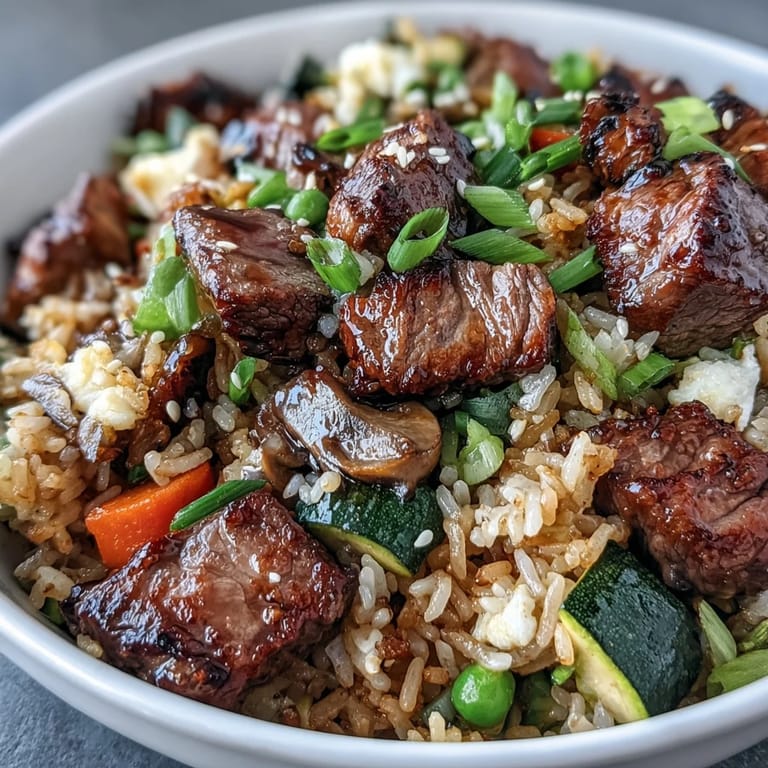
 This recipe has become my weeknight superpower because it looks and tastes like you spent way more effort than you actually did. Every time someone tastes it, they're genuinely surprised it came from your home kitchen instead of that place downtown with the theatrical cooking and the bill that makes you wince.
Recipe FAQs
- → What cut of steak works best for hibachi?
Sirloin is ideal for hibachi-style cooking because it's tender, flavorful, and holds up well to high-heat searing. You can also use ribeye, New York strip, or flank steak sliced against the grain for maximum tenderness.
- → Why must the rice be cold and day-old?
Cold, day-old rice has less moisture, which prevents the fried rice from becoming mushy or sticky. Freshly cooked hot rice contains too much steam and will clump together instead of achieving that perfect light, fluffy texture.
- → Can I make this dish ahead of time?
You can prep all ingredients in advance—slice the vegetables, marinate the steak, and cook the rice the day before. However, it's best cooked fresh for optimal texture. Leftovers reheat well in a skillet over medium heat.
- → What vegetables can I substitute?
Feel free to swap in bell peppers, broccoli, bean sprouts, baby corn, or snap peas. The key is to use vegetables that cook quickly and maintain some crunch for texture contrast with the tender steak and soft rice.
- → Is there a gluten-free option?
Yes! Simply use tamari or coconut aminos instead of regular soy sauce. Ensure your mirin is gluten-free, or substitute with additional soy sauce alternative plus a pinch of sugar to balance the flavors.
- → How do I get that restaurant-style smoky flavor?
The key is cooking over high heat in a large skillet or wok, allowing the ingredients to sear and develop a slight char. Don't overcrowd the pan, and let the steak sit undisturbed for a moment before stirring to create a nice crust.