 Pin It
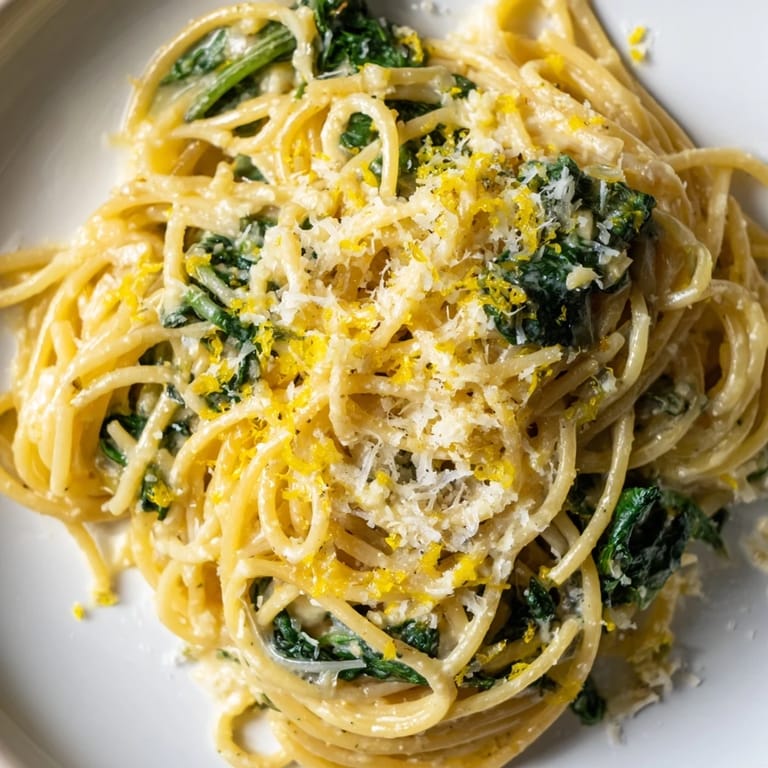
 The first time I made this lemon spinach spaghetti, I was nursing a stubborn cold and craving something that felt like a warm hug but still had brightness. My grandmother always said citrus was nature's medicine, so I squeezed way too much lemon into the cream sauce that first attempt. It was puckeringly sharp, but something about that intensity kept me coming back to tweak the balance until I found just the right harmony.
Last spring, I made a massive batch for my book club, and one friend who swore she hated cream sauces went back for thirds. She kept asking what the secret ingredient was, convinced Id slipped something complicated in there. Sometimes the most impressive dishes are just excellent ingredients treated with respect and a bit of courage.
Ingredients
- Thin spaghetti: The delicate strands catch the light sauce beautifully, and I find the texture more elegant than regular spaghetti
- Salt: Don't be shy here, the pasta water should taste like the ocean, it's your only chance to season the noodles themselves
- Fresh baby spinach: Baby spinach wilts quickly without becoming tough or bitter, and its mild sweetness balances the sharp lemon
- Garlic: Finely minced garlic disperses evenly throughout the sauce rather than leaving you with big spicy chunks
- Lemon zest and juice: Both are essential, the zest gives aromatic brightness while the juice provides the tangy backbone
- Unsalted butter: Starting with unsalted butter lets you control exactly how salty the final dish becomes
- Heavy cream: Don't substitute with anything lighter here, the richness is what tames the lemon's acidity
- Grated Parmesan: Freshly grated cheese melts into the sauce creamily, while pre-grated can turn grainy and sad
- Black pepper: Be generous, the peppery warmth against the cool cream is what makes each bite interesting
Tired of Takeout? 🥡
Get 10 meals you can make faster than delivery arrives. Seriously.
One email. No spam. Unsubscribe anytime.
Instructions
- Get your water going first:
- Bring a large pot of generously salted water to a rolling boil, you want it vigorously bubbling before the spaghetti hits the water
- Cook the spaghetti:
- Add the pasta and cook until it still has a tiny bite in the center, then scoop out that precious half cup of starchy pasta water before draining
- Start your flavor base:
- Melt the butter in a large skillet over medium heat, watching it foam and subside, then add the garlic and let it sizzle for just one minute until you can smell it without letting it brown
- Wilt the spinach:
- Add the spinach and stir, it might look like too much at first but it will collapse dramatically in just a few minutes, then stir in the lemon zest
- Build the sauce:
- Pour in the heavy cream and let it come to a gentle bubble, then stir in the lemon juice and Parmesan, watching the cheese melt and the sauce thicken slightly as it simmers
- Bring it all together:
- Add the drained spaghetti to the skillet and toss it vigorously with tongs, adding splashes of that reserved pasta water until the sauce turns glossy and coats each strand
- Season and serve:
- Taste and add more pepper than you think you need, then plate immediately while the sauce is still fluid and velvety
 Pin It
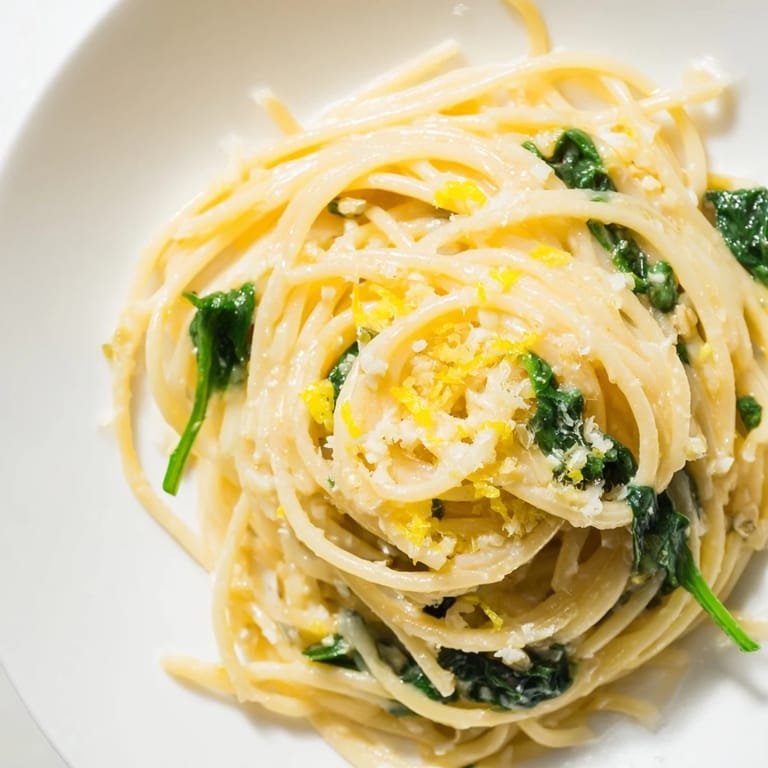
 This pasta became my go to dinner for friends recovering from surgery or having a rough week, because it feels substantial and special but still gentle on the stomach. Food really is love, and sometimes a bowl of lemony pasta says more than a sympathy card ever could.
Make It Your Own
I've learned that this sauce is incredibly forgiving, so play with it. Add a handful of frozen peas in with the spinach for sweetness, or wilt some arugula instead if you want more peppery bite. During summer, I'll toss in halved cherry tomatoes that burst in the heat and create little pockets of bright acidity.
Timing Is Everything
The trickiest part is coordinating the pasta finishing at the same time as your sauce. Start boiling water before you do anything else, and if the pasta finishes before the sauce, just drain it and toss it with a tiny bit of olive oil to prevent sticking. It can wait a few minutes, but the sauce cannot wait for the pasta.
Serving Suggestions
Keep the sides simple, because this pasta is the star. A crisp green salad with an acidic vinaigrette cuts through the richness, and warm crusty bread is non negotiable for sopping up every last drop of sauce.
- Grill some shrimp or chicken if you want protein, but keep the seasoning simple so it doesn't compete with the lemon
- A white wine with good acidity like Sauvignon Blanc makes each bite feel brighter
- Leftovers reheat surprisingly well with a splash of cream, though the sauce will thicken in the fridge
 Pin It
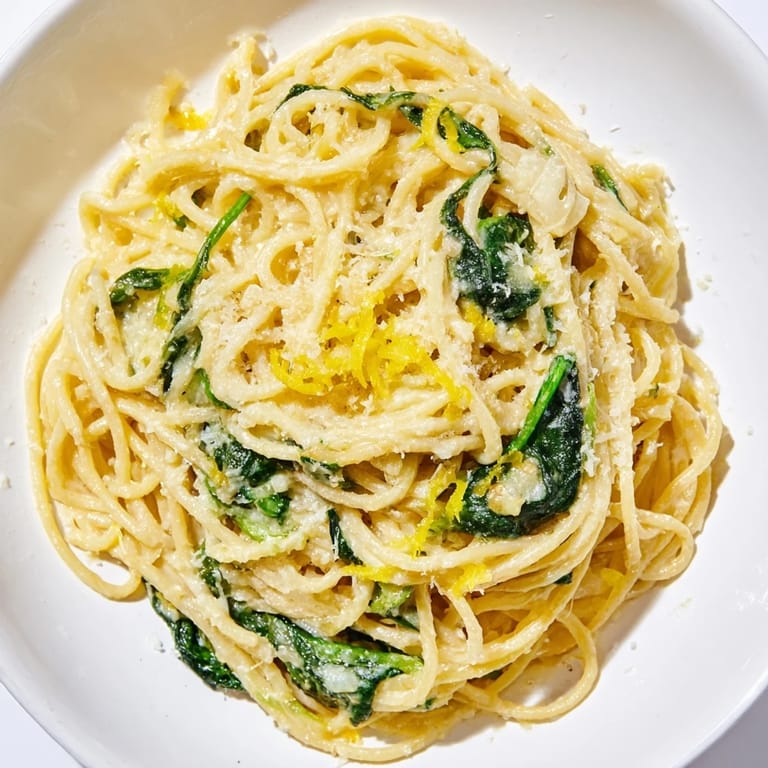
 There's something about lemon and cream together that feels like culinary magic, bright and rich all at once. I hope this becomes one of those recipes you turn to without thinking, the one that always works and always makes people happy.
Recipe FAQs
- → Can I make this dish ahead of time?
This pasta is best served immediately while the sauce is silky and creamy. However, you can prepare the components ahead—cook the spaghetti, make the sauce, and store them separately. Reheat gently with a splash of pasta water or cream to restore consistency before tossing together.
- → What can I substitute for heavy cream?
For a lighter version, use half-and-half or whole milk with an extra tablespoon of butter. Coconut cream works for dairy-free alternatives, though it will subtly change the flavor profile. The sauce may be slightly less rich but still deliciously creamy.
- → How do I prevent the sauce from separating?
Keep the heat at medium-low when combining the cream and lemon juice. Avoid boiling vigorously, which can cause dairy to curdle. If separation occurs, whisk vigorously off-heat and add a small amount of cold cream or pasta water to re-emulsify.
- → Can I add protein to make it more filling?
Grilled chicken, pan-seared shrimp, or crispy pancetta work beautifully. Cook your protein separately and serve atop the finished pasta, or fold it in during the final toss. Chickpeas or white beans also make excellent vegetarian additions.
- → Why reserve pasta water?
The starchy pasta water is the secret to achieving a perfectly silky, cohesive sauce. When added to the cream-based sauce, it helps bind everything together, creating a glossy coating that clings beautifully to each strand of spaghetti rather than pooling at the bottom.
- → Is this suitable for meal prep?
The pasta absorbs sauce as it sits, so leftovers become more of a coated pasta dish rather than saucy. Store in an airtight container for up to 3 days. Reheat with a splash of water or cream to loosen the sauce, though the texture will be slightly different from freshly made.