 Pin It
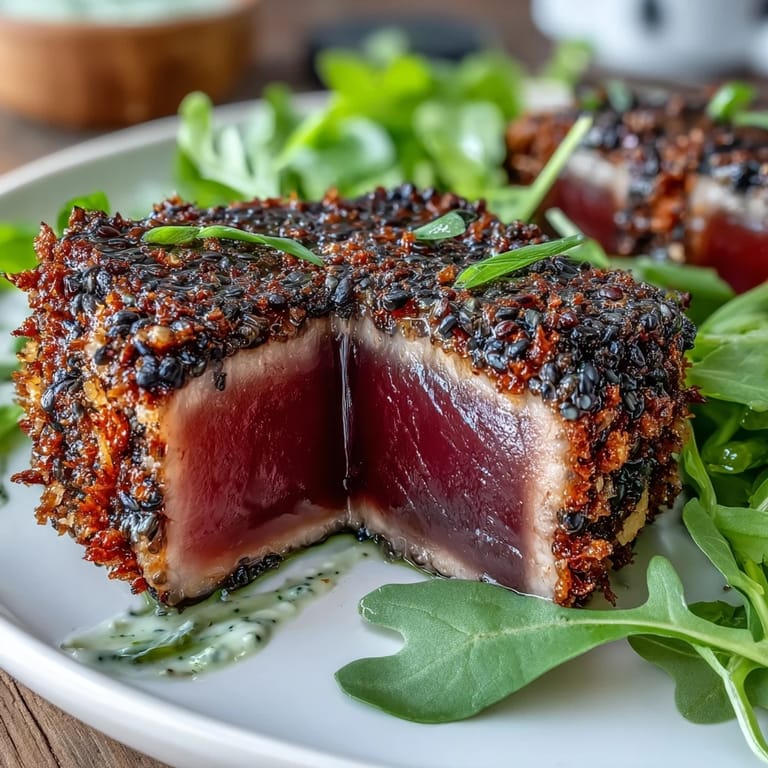
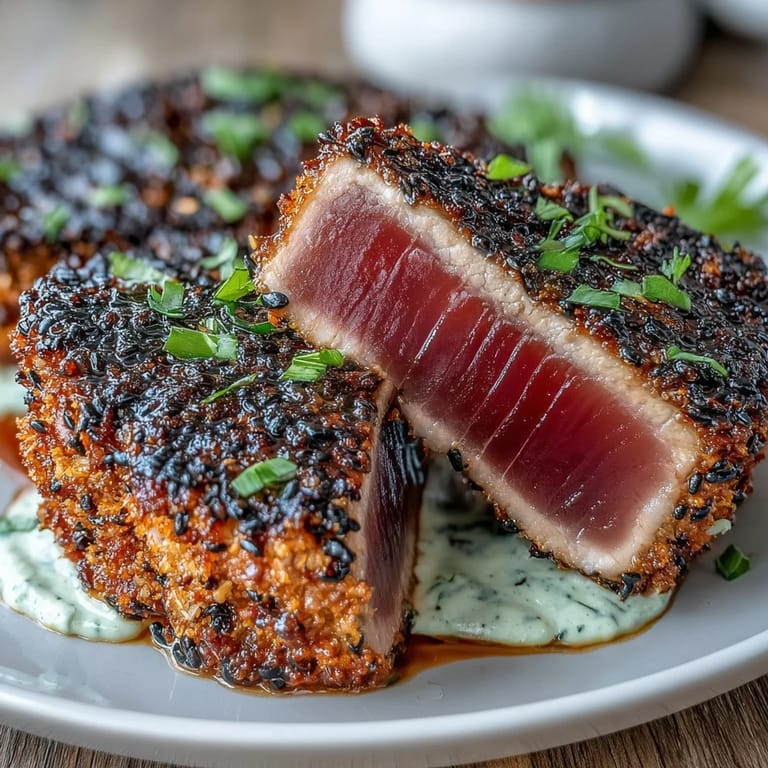
 My chef friend texted me a photo of pan-seared tuna crusted in black sesame seeds, and I became obsessed. The contrast of that dark, nutty crust against the rosy-rare center seemed impossible to achieve at home, yet within minutes of trying, I understood the magic: high heat, perfect timing, and knowing when to stop. Now this dish shows up on my table whenever I want to feel like I'm dining somewhere special without leaving my kitchen.
I made this for someone I was trying to impress, and they cut into it without warning, releasing that perfect steam and revealing the rare pink center. The look on their face told me everything—sometimes food really is a language all its own.
Ingredients
- Sushi-grade tuna steaks (2, about 6 oz each, 1 inch thick): This must be truly sushi-grade; ask your fishmonger directly and buy from a trusted source, as it's eaten raw or nearly raw.
- Black sesame seeds (1/2 cup, toasted): These have an earthier, nuttier flavor than white sesame and they toast beautifully before you use them, bringing out even deeper notes.
- White sesame seeds (1/4 cup, toasted, optional): Add these only if you want visual contrast; they're milder in flavor but create a striking two-tone crust.
- Soy sauce (1 tablespoon): A brush of this seasons the tuna before crusting and adds umami depth without overpowering the fish.
- Sesame oil (1 teaspoon): This fragrant oil adds aroma and richness; use it sparingly since a little goes a long way.
- Mayonnaise (1/4 cup): The creamy base for your wasabi sauce; use a quality brand or make your own for better results.
- Wasabi paste (1–2 teaspoons): Start with less and taste as you go, since heat levels vary wildly between brands and your own tolerance.
- Rice vinegar (1 teaspoon): A touch of acidity brightens the mayo and balances the wasabi's heat.
- Lemon juice (1 teaspoon): Fresh lemon keeps the whole dish feeling light and adds brightness to each bite.
- Salt, black pepper, scallions, pickled ginger, lemon wedges: Season to your preference and garnish generously for color and flavor layers.
Tired of Takeout? 🥡
Get 10 meals you can make faster than delivery arrives. Seriously.
One email. No spam. Unsubscribe anytime.
Instructions
- Prepare your tuna with intention:
- Pat the steaks completely dry with paper towels—this matters more than you'd think, as moisture prevents the seeds from sticking and the crust from crisping. Brush lightly with soy sauce and sesame oil, then season with just a pinch of salt and pepper, remembering that the seeds will add saltiness too.
- Create the crust:
- Pour your toasted black sesame seeds onto a shallow plate and press each tuna steak firmly into them, rotating and pressing until all sides are coated evenly. The seeds should stick to the oil and soy coating, creating an armor that will turn golden and crunchy.
- Get your pan screaming hot:
- Heat your non-stick skillet or cast-iron pan over high heat until a drop of water dances across the surface. Add just enough oil to coat the bottom, and listen for that subtle sizzle that tells you it's ready.
- Sear with confidence and speed:
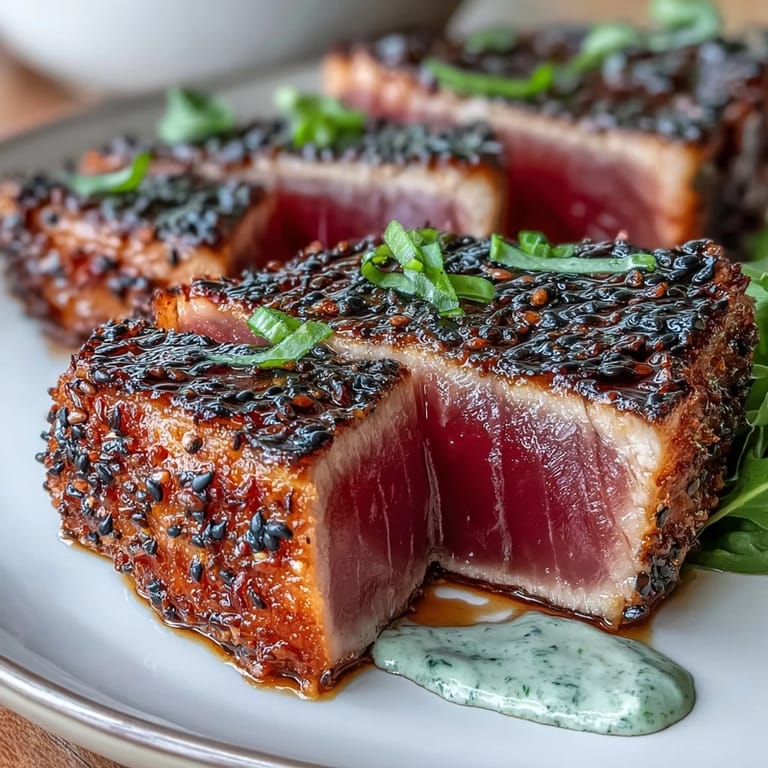
- Place the tuna steaks in the hot pan and resist the urge to move them—let them sit for 30 to 45 seconds per side until the sesame crust turns deep golden brown and the edges of the tuna develop a slight golden crust. The inside will remain tender and rare, which is exactly what you want.
- Make your wasabi mayo:
- While the tuna rests on a cutting board for a minute, whisk together the mayonnaise, wasabi paste, rice vinegar, and lemon juice until smooth and creamy. Taste it and adjust the wasabi heat to your preference—some like it subtle, some like it bold.
- Slice and present:
- Cut the tuna steaks against the grain into half-inch slices, which makes them tender and elegant on the plate. Arrange on your plate, drizzle with wasabi mayo, and scatter with scallions, pickled ginger, and lemon wedges for color and brightness.
 Pin It
 There's a moment when you plate this—when the wasabi steam rises and mingles with the aroma of toasted sesame—where you realize you've created something worthy of the care you put into it. It's the kind of dish that turns a Tuesday into something memorable.
Sourcing Your Tuna Matters
This dish lives or dies by tuna quality, and I learned this the hard way after buying from a grocery store that couldn't promise freshness. Now I call ahead, talk to the fishmonger, and ask when the delivery came in—it changes everything about the final result, transforming a good dish into something remarkable.
Wasabi Heat Is Personal
I once made this for someone who claimed they loved spice, then watched their face turn red after a bite. Now I always serve the wasabi mayo on the side so people can control the intensity themselves, which feels more generous and lets everyone enjoy the tuna exactly as they want.
Building Your Plate
The garnishes aren't decoration—pickled ginger cuts through the richness, scallions add a crisp green note, and lemon wedges brighten every element. Think of them as part of the flavor story you're telling, not something added at the end as an afterthought.
- Serve this on chilled plates if you have time, as the contrast between the warm tuna and cool plate keeps everything tasting fresh.
- If you're feeding more than two people, prepare your ingredients assembly-line style so you can sear multiple steaks quickly while they're all hot.
- Leftover wasabi mayo keeps in the fridge for three days and works beautifully on roasted vegetables or grilled fish later in the week.
 Pin It
 This dish taught me that restaurant-quality cooking isn't about complexity or fancy equipment—it's about respecting your ingredients, understanding heat, and knowing when to stop. Make it once and it becomes part of your regular rotation.
Recipe FAQs
- → What type of tuna is best for this dish?
Sushi-grade tuna steaks about 1 inch thick are ideal to ensure freshness and suitable texture for searing.
- → How should the tuna be cooked?
Sear the tuna briefly on high heat, about 30-45 seconds per side, to keep the inside rare and tender.
- → Can I use white sesame seeds instead of black?
Black sesame seeds offer a more robust flavor and striking appearance, but white seeds can be used optionally for color contrast.
- → How spicy is the wasabi mayonnaise?
The wasabi level can be adjusted to taste by varying the amount of wasabi paste mixed into the mayonnaise.
- → What are some suggested garnishes?
Thinly sliced scallions, pickled ginger, and lemon wedges add freshness and balance to the dish.